
 Photo: H. Helmlechner / Wikimedia Commons / License: CC BY-SA 4.0
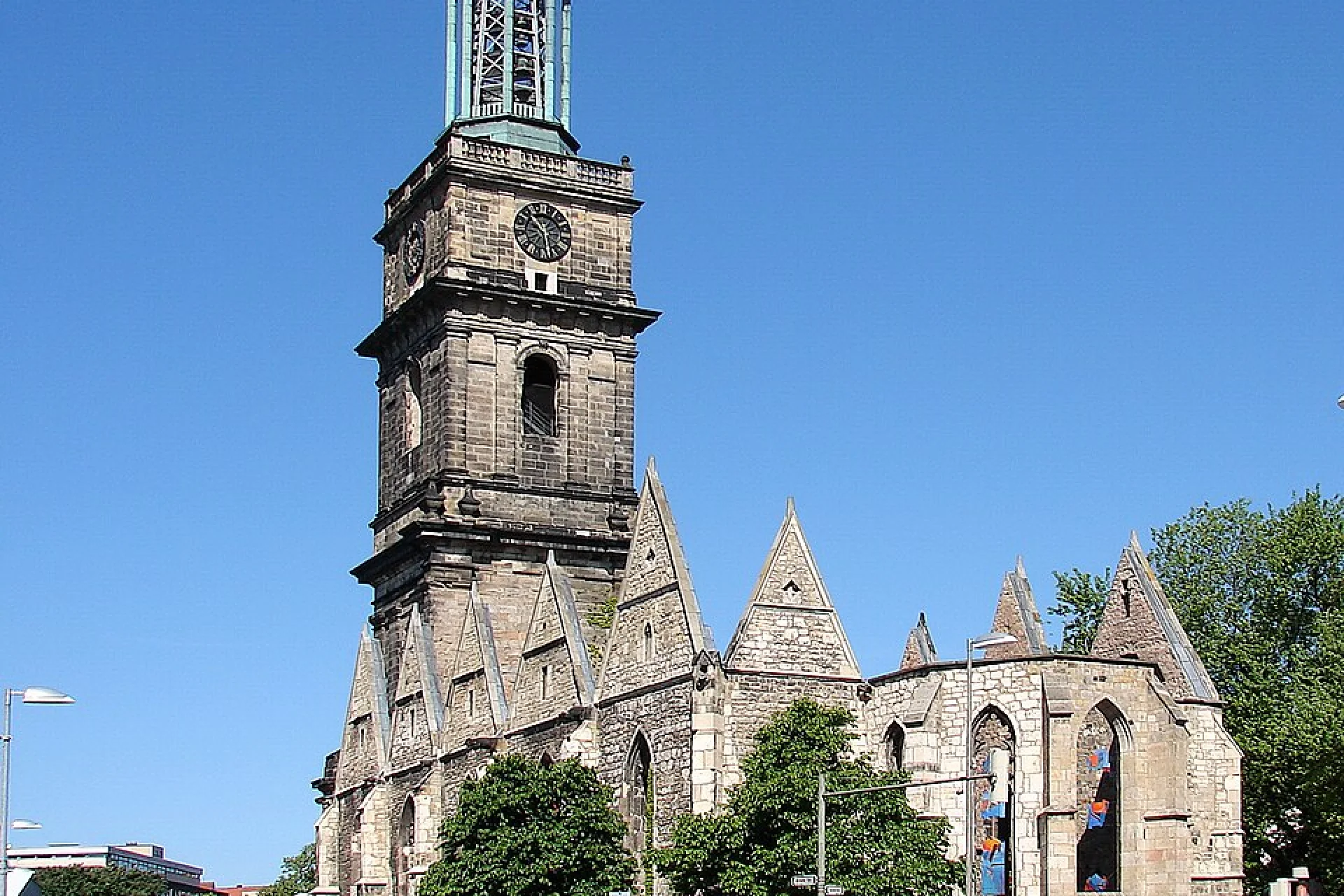
The silent skeleton of Aegidien Church stands today as one of Hannover's most poignant reminders of the Second World War. What was once a vibrant parish church, dating back to the 14th century, now serves as an open-air memorial, inviting visitors to reflect on the devastating impact of conflict on civilian life.
Built in the Gothic style, Aegidien Church was a significant landmark in Hannover for centuries, witnessing the city's growth, struggles, and triumphs. Its soaring spires and intricate stonework were a testament to medieval craftsmanship and a spiritual anchor for the local community. For over 600 years, it stood proudly, an integral part of Hannover’s urban landscape and historical narrative.
The night of October 8-9, 1943, irrevocably altered Aegidien Church's fate. As Allied bombers targeted Hannover, the city endured one of its most brutal air raids. Incendiary bombs rained down, turning large parts of the historic city center, including Aegidien Church, into a raging inferno. The church was almost completely destroyed, reduced to a roofless shell, its interior gutted by fire. Subsequent bombings throughout the war ensured its ruin. Aegidien Church became a stark symbol of the immense destruction inflicted upon German cities and their populations during the air war, representing the loss of countless lives and the fabric of pre-war urban existence.
Today, the ruins of Aegidien Church are intentionally preserved in their war-damaged state, serving as a powerful memorial. The absence of a roof opens the structure to the sky, creating an atmosphere of solemn contemplation. Visitors can walk amidst the remaining walls and arches, sensing the echoes of history in every stone.
A central feature of the memorial is the "Peace Bell," donated by Hannover's Japanese sister city, Hiroshima, in 1985. Cast from the remains of the original Hiroshima Peace Bell, it rings out daily, a powerful symbol of global remembrance and a plea for peace. Inside the former choir, a sculpture by Kurt Lehmann, "Steigender Mensch" (Ascending Man), further emphasizes themes of hope and resilience amidst devastation. The memorial is always accessible, offering a space for quiet reflection and a tangible connection to the human cost of war.
A visit to Aegidien Church is an essential stop for anyone seeking to understand the full scope of World War II. It offers a unique opportunity to stand within a place directly impacted by the conflict, to witness its physical scars, and to reflect on the civilian experience of total war. It's not just a historical site; it's a profound memorial that transcends national boundaries, reminding us of the universal call for peace. For travelers on a World War II journey, Aegidien Church serves as a crucial point of reflection on loss, resilience, and the enduring hope for a world without such devastation.
Plan your World War II trip with guides to museums, battlefields, memorials and historic sites worldwide. Discover the best WWII locations for your next tour.