
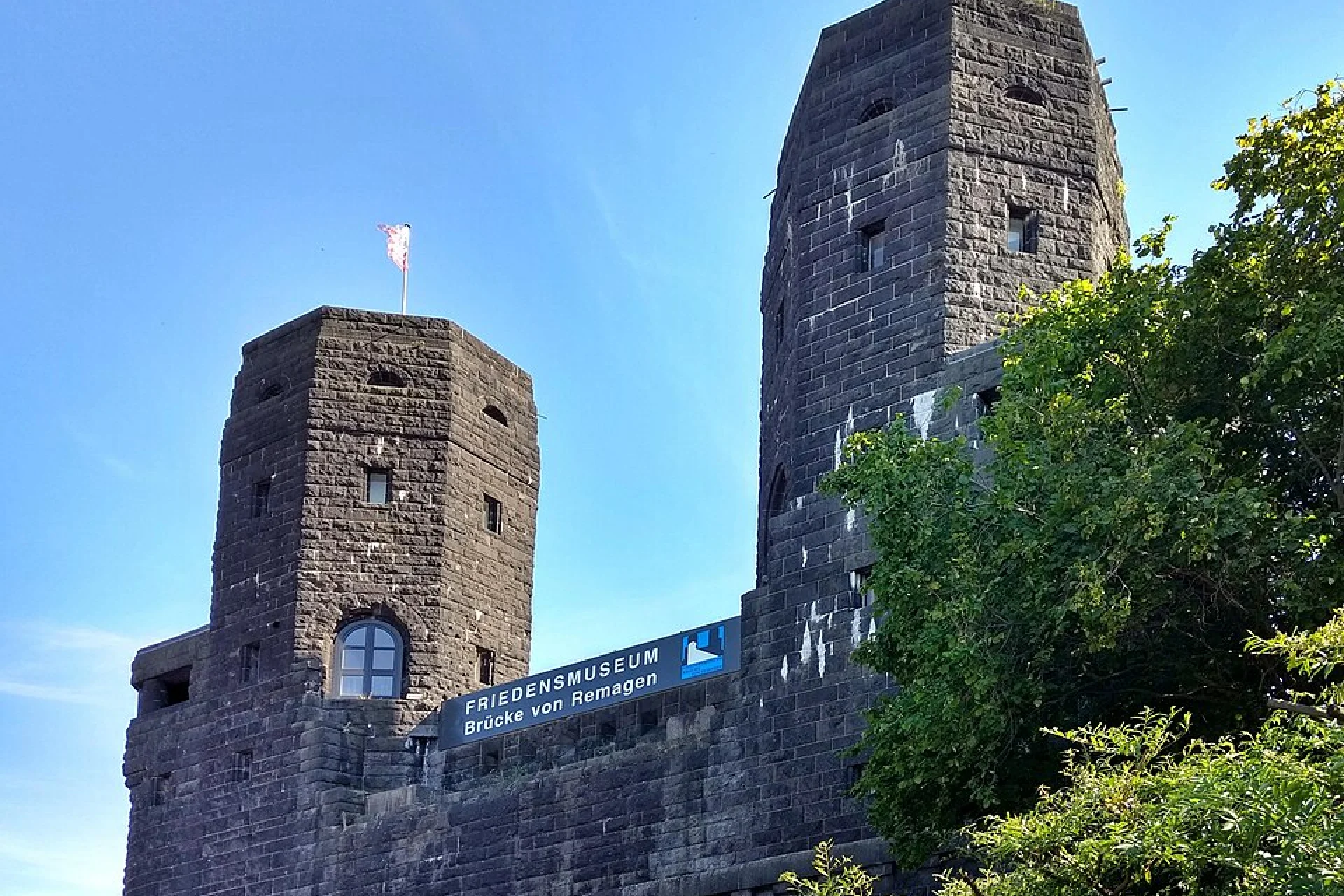
High above the tranquil waters of the Rhine, where now only skeletal remnants of stone towers stand, once stretched the magnificent Ludendorff Bridge. Constructed during World War I to facilitate troop and supply movements, this railway bridge at Remagen was not initially conceived as a site of global significance in a future conflict. Yet, by the spring of 1945, as the Allied forces pushed inexorably into Nazi Germany, this seemingly ordinary structure would become the stage for one of the most unexpected and pivotal moments of World War II.
March 7, 1945, etched itself into the annals of military history. As the American 9th Armored Division spearheaded the Allied advance, they encountered a shocking sight: the Ludendorff Bridge, against all expectations, still stood intact across the Rhine. The retreating German forces, having failed to detonate its charges effectively, watched in disbelief as US troops, led by Company A of the 27th Armored Infantry Battalion, surged across. This audacious capture, often dubbed the "Miracle of Remagen," provided the Allies with their first precious bridgehead over the formidable Rhine – a strategic barrier thought to be an impregnable defense for the heart of Germany.
For ten days, under relentless German counter-attacks from land, air, and even V-2 rocket strikes, American engineers and combat troops fought valiantly to hold and reinforce the bridge. Thousands of Allied soldiers and tons of equipment poured across, accelerating the end of the war in Europe. The bridge, severely weakened by battle and its initial failed demolition, eventually succumbed on March 17, 1945, collapsing into the river. Yet, by then, its purpose had been served; the bridgehead was firmly established, and the Rhine barrier had been breached.
Today, the Friedensmuseum Brücke von Remagen (Peace Museum Bridge of Remagen) stands within the two remaining bridge towers on the west bank of the Rhine. This poignant museum is not a glorification of war, but a solemn tribute to the human experience amidst conflict and a powerful plea for peace. Visitors can explore a comprehensive exhibition detailing the bridge's construction, its capture, the fierce battles fought for its control, and its eventual collapse.
Through original photographs, documents, artifacts, and personal accounts, the museum brings to life the stories of the soldiers, engineers, and civilians caught in the maelstrom. Standing within these historic towers, you can gaze upon the Rhine where the bridge once spanned, gaining a profound sense of the strategic importance of this location and the sacrifices made here. The "Bridgehead of Remagen" memorial nearby further commemorates this extraordinary chapter in history.
Visiting the Friedensmuseum Brücke von Remagen is an essential pilgrimage for anyone tracing the footsteps of World War II. It offers a unique opportunity to stand on the very ground where a pivotal moment in the final push for victory unfolded. Beyond the military strategy, the museum's dedication to peace provides a vital perspective, reminding us of the devastating human cost of war and the enduring hope for a world free from conflict. It is a place of reflection, remembrance, and profound historical resonance, making it an indispensable part of any WWII history journey.
Plan your World War II trip with guides to museums, battlefields, memorials and historic sites worldwide. Discover the best WWII locations for your next tour.