
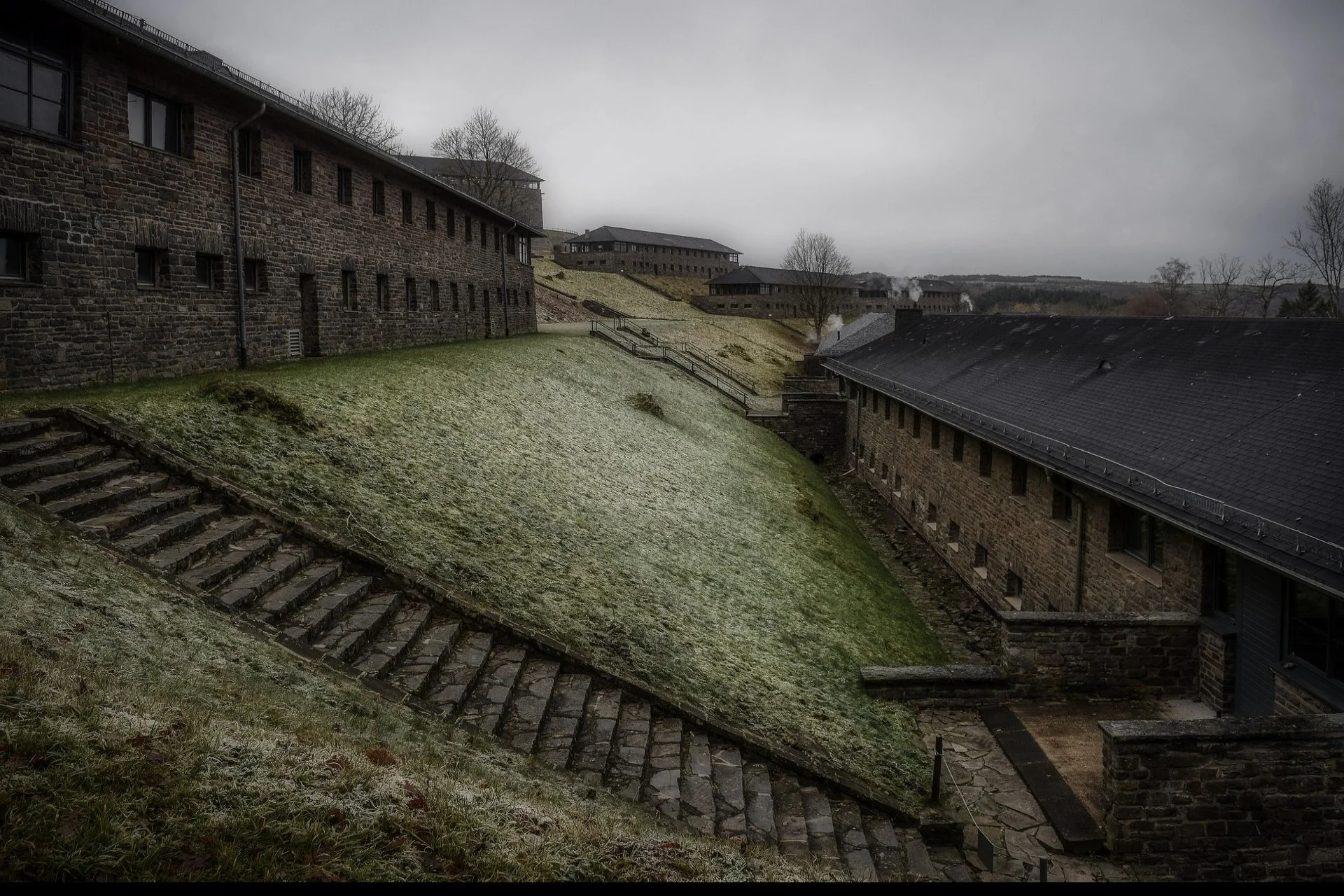
NS Ordensburg Vogelsang stands as a monumental and chilling testament to the ambition of the Nazi regime. Constructed between 1934 and 1936, it was one of three "Ordensburgen" (order castles) designed to train the future political and military elite of the Nazi Party. Nestled deep within the Eifel region of Germany, its imposing architecture, inspired by medieval fortresses, was intended to project power, permanence, and a distorted sense of German heritage. Here, young men deemed racially pure and ideologically committed were subjected to rigorous physical and ideological indoctrination, preparing them to lead the "Thousand-Year Reich."
While not a battlefield itself, Vogelsang played a crucial, albeit ideological, role in the machinery of World War II. It was a crucible where the architects and enforcers of Nazi policy were forged. The "Junker schools," as they were sometimes called, aimed to create an unshakeable cadre of leaders, steeped in the regime's brutal ideology, ready to implement its expansionist and genocidal plans. As the war progressed, the Ordensburg's function evolved; it served as a military training ground and later, towards the end of the conflict, as a temporary military hospital and barracks for German troops. In the final chaotic months of 1945, American forces captured Vogelsang, encountering only minimal resistance, marking the end of its dark chapter under Nazi control.
Today, NS Ordensburg Vogelsang has undergone a profound transformation. No longer a monument to a terrible ideology, it is now an international meeting place and the core of the Vogelsang IP (International Place) education center. Visitors can explore the vast complex, including its impressive parade grounds, the "House of Knowledge," and the dormitory buildings. The site now hosts permanent exhibitions such as "Vogelsang: A Former NS-Ordensburg in the Eifel" and "Wilderness Dreams," focusing on the history of the site, the Eifel National Park, and the importance of remembrance and education. Guided tours offer deep insights into the architecture, the indoctrination methods, and the historical context of the facility, providing a critical perspective on its past.
A journey to NS Ordensburg Vogelsang is an essential experience for anyone seeking to understand the full scope of World War II history. Standing amidst these formidable buildings, one can feel the weight of the past, contemplating the immense power wielded by the regime and the human cost of its ambitions. It offers a unique opportunity to reflect on the dangers of political extremism and the vital importance of democratic values. This location, now dedicated to peace, education, and remembrance, serves as a powerful reminder of how such structures can be reclaimed and repurposed to teach future generations the lessons of history, ensuring that the atrocities of the past are never forgotten. It is a solemn pilgrimage, offering profound insights into a pivotal period.
Plan your World War II trip with guides to museums, battlefields, memorials and historic sites worldwide. Discover the best WWII locations for your next tour.