
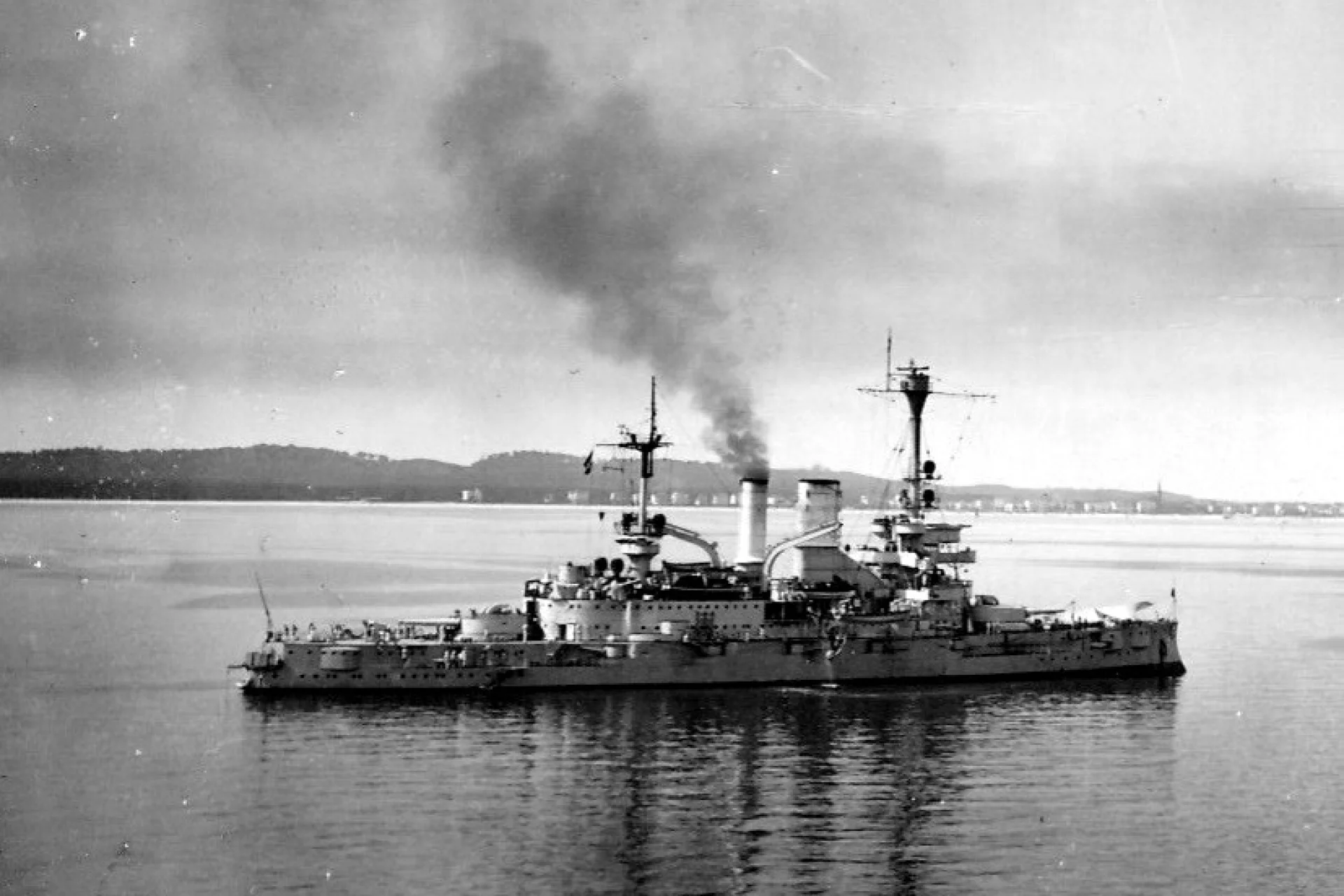
The SMS Schleswig-Holstein, an aging German pre-dreadnought battleship, holds a somber place in history as the vessel that fired the first shots of World War II. Her bombardment of the Polish garrison at Westerplatte on September 1, 1939, ignited a conflict that would engulf the world, forever linking this ship to the war's devastating genesis.
Key Facts:
The SMS Schleswig-Holstein, despite its obsolescence by the eve of World War II, was thrust into the role of war instigator. Under the guise of a goodwill visit to Danzig (now Gdańsk, Poland), the ship covertly positioned itself near the Polish Military Transit Depot at Westerplatte. At 04:47 AM on September 1, 1939, her 28 cm guns unleashed a devastating barrage on the Polish defenders, marking the unequivocal beginning of World War II. This brutal assault, a clear act of aggression, shocked the world and shattered any remaining hopes for peace.
Following its pivotal role in the invasion of Poland, the Schleswig-Holstein's active combat career was limited due to its age and lack of modern capabilities. It briefly participated in Operation Weserübung, the invasion of Denmark and Norway in April 1940, primarily as an icebreaker and transport ship for landing troops. For the remainder of the war, the ship served mainly as a training vessel for naval cadets in the Baltic Sea, a testament to its outdated design which rendered it unsuitable for front-line engagements against modern warships.
In December 1944, while docked in Gdynia, then Gotenhafen, the Schleswig-Holstein was targeted and heavily damaged by British Royal Air Force bombing raids. She subsequently capsized and sank in shallow water. In the final days of the war, fearing its capture by advancing Soviet forces, the Germans scuttled the wreck in March 1945.
The SMS Schleswig-Holstein remains an enduring symbol of the brutal start of World War II. Its name is irrevocably linked to the surprise attack on Poland and the subsequent global catastrophe. After the war, the partially submerged wreck was salvaged by the Soviet Union, towed to Tallinn, and then reportedly used as a target ship for naval artillery practice in the Baltic Sea until the 1960s, eventually being destroyed. Today, while no physical remains of the original ship are preserved for public viewing, the site of the Westerplatte battle in Gdańsk, Poland, stands as a poignant memorial. Visitors can walk the grounds where the first shots were fired, reflecting on the courage of the Polish defenders and the immense human cost that began on that fateful September morning. The name Schleswig-Holstein evokes not a majestic warship, but the echo of an unforgivable act that plunged the world into darkness.
Plan your World War II trip with guides to museums, battlefields, memorials and historic sites worldwide. Discover the best WWII locations for your next tour.