
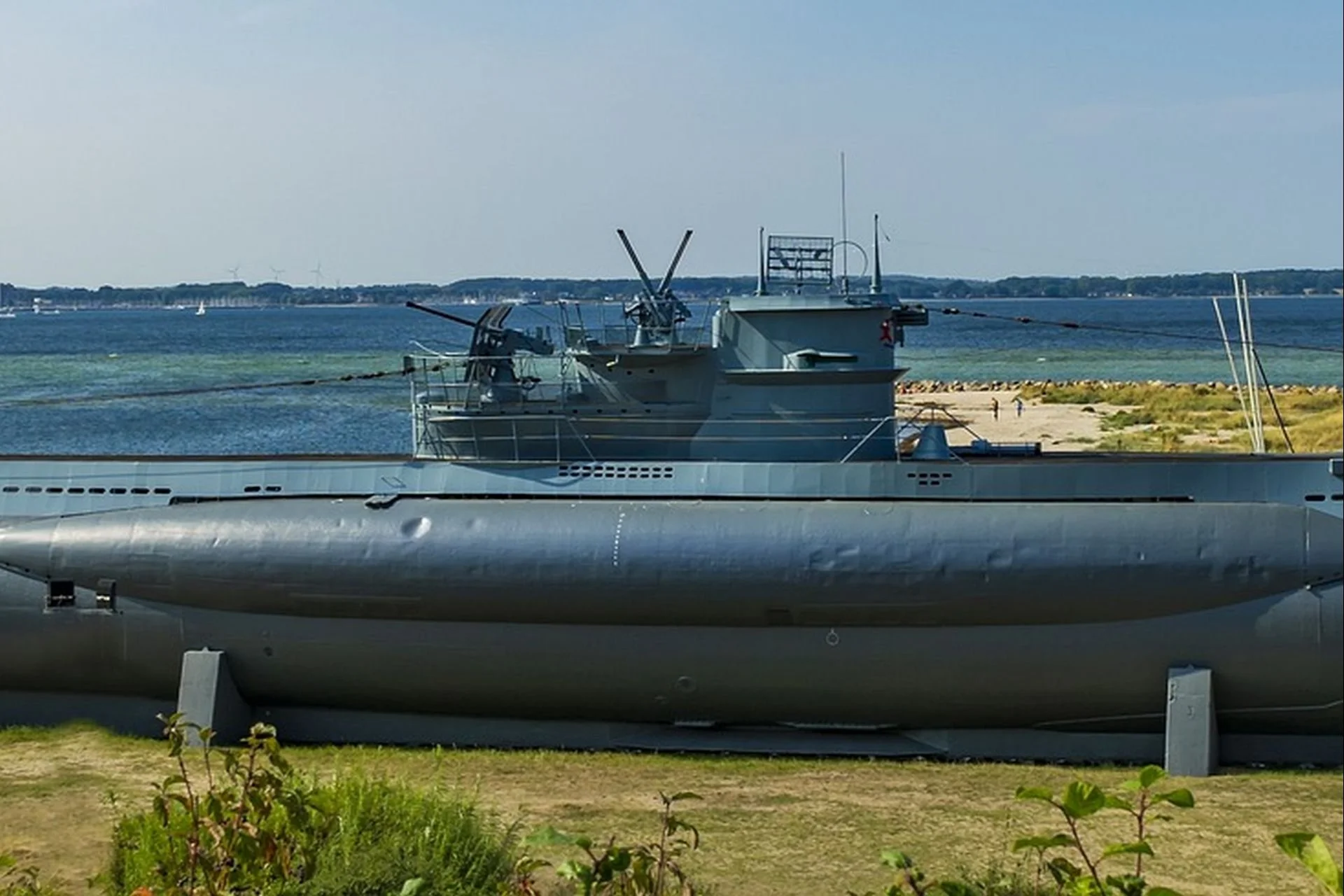
The chill wind off the Baltic Sea in Laboe carries with it echoes of a tumultuous past. Standing guard on the shore, the Technisches Museum U 995 offers a profound and sobering encounter with one of World War II's most iconic and feared vessels: a Type VII-C/41 U-boat.
Launched in July 1943, U-995 was a member of the Type VII-C/41 class, an improvement on the widely produced Type VII-C U-boats. These submarines were the backbone of the German Kriegsmarine's U-boat force, known for their rugged design and effective operational capabilities. U-995 primarily served in the Arctic Ocean, targeting Allied convoys that supplied the Soviet Union. Her operational life was short but intense, characterized by the brutal conditions and constant peril faced by U-boat crews in the North Atlantic and Arctic.
The Battle of the Atlantic, fought relentlessly from 1939 to 1945, was a critical theatre of World War II. Germany's U-boats played a pivotal role, attempting to sever Britain's supply lines and halt the flow of vital resources. U-995's service in the Arctic highlights a lesser-known but equally brutal front of this battle, where extreme cold, ice, and relentless Allied air and naval patrols made survival a daily struggle. Every U-boat, including U-995, was a steel coffin, a testament to the immense pressures and sacrifices demanded of the human beings who served within their claustrophobic confines. The fate of many U-boat crews, lost at sea, underscores the devastating human cost of this underwater conflict.
Today, U-995 is the only surviving Type VII-C U-boat in the world, preserved as a museum ship. As visitors step through the narrow hatch, the atmosphere immediately shifts. The low ceilings, the complex maze of pipes, valves, and gauges, the tiny bunks, and the powerful smell of machinery transport one back to an era of high-stakes naval warfare. You can explore the torpedo rooms, the control room with its daunting array of instruments, the cramped galley, and the engine room. This tangible encounter provides an unparalleled understanding of the operational realities, the technological ingenuity, and the sheer grit required of the 50-strong crew who called this vessel home beneath the waves.
Visiting U-995 is more than just seeing a historical artifact; it is an immersive journey into a crucial chapter of World War II. It offers a unique opportunity to grasp the scale of the Battle of the Atlantic and the profound human experiences associated with it. Standing where men lived, fought, and faced their fears provides a deep, respectful connection to the past. For anyone on a World War II history journey, this site is essential, offering a powerful, firsthand perspective on the men and machines that shaped the course of the war at sea, inviting contemplation on conflict, courage, and sacrifice.

Visit Marine-Ehrenmal Laboe, Germany's powerful Naval Memorial. Explore a U-boat & honor WWII seafarers. A profound stop on your historical journey.
Rating: ★★★★★
Plan your World War II trip with guides to museums, battlefields, memorials and historic sites worldwide. Discover the best WWII locations for your next tour.