
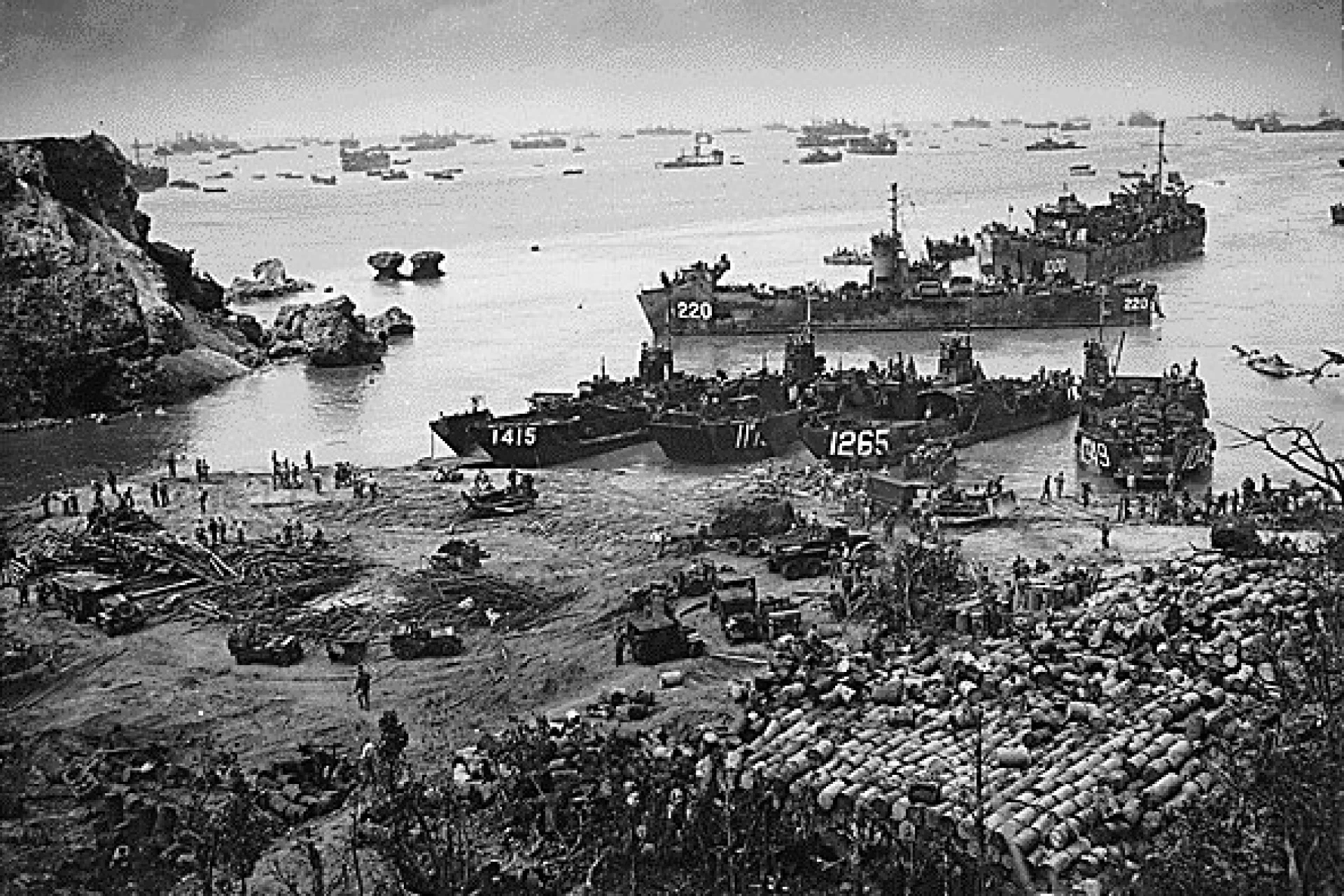
The Battle of Okinawa, fought from April to June 1945, was the Pacific Theater's final major land battle of World War II. This brutal campaign, marked by fierce Japanese resistance and staggering casualties for both combatants and civilians, profoundly influenced Allied strategies for invading mainland Japan, highlighting the immense human cost of total war.
Key Facts:
As the Allied "island-hopping" campaign neared Japan, Okinawa became the final, formidable barrier. "Operation Iceberg," the invasion on April 1, 1945, involved an unprecedented force of U.S. Army and Marine Corps troops, supported by a massive naval fleet. The Imperial Japanese Army, under Lt. Gen. Mitsuru Ushijima, meticulously prepared deeply entrenched defensive positions, notably the heavily fortified Shuri Line. Their strategy was to inflict maximum casualties, making any invasion of Japan prohibitively costly.
The battle quickly devolved into a savage war of attrition. American forces faced relentless resistance: suicidal Banzai charges, effective infiltration, and counterattacks from hidden caves. The skies and seas around Okinawa witnessed intense actions, with Japanese Kamikaze pilots launching waves of desperate attacks against Allied warships, causing significant naval losses. Ashore, fighting was often hand-to-hand amidst torrential rains.
The civilian population of Okinawa suffered terribly. Many were forced into labor, became collateral damage, or tragically committed mass suicides under duress. The battle's suffering was immense, with an estimated 100,000 Japanese soldiers, over 12,000 American servicemen, and between 40,000 and 150,000 Okinawan civilians losing their lives. This horror profoundly influenced Allied decision-making regarding the atomic bombs, as strategists sought alternatives to a mainland invasion.
Okinawa today stands as a powerful testament to WWII's final sacrifices. The Okinawa Peace Memorial Park in Mabuni, Itoman City, is the focal point for remembrance. Here, the Cornerstone of Peace stands as a poignant monument, listing the names of all known casualties, regardless of nationality. Visitors can walk among these inscribed stones, a humbling experience underscoring war's universal tragedy.
The park also houses the Okinawa Prefectural Peace Memorial Museum, offering comprehensive exhibits blending historical artifacts, personal testimonies, and educational displays, with a strong emphasis on civilian experiences. Elsewhere, the former Japanese Navy Underground Headquarters in Tomigusuku provides a stark, preserved insight into the conditions faced by Japanese defenders. The Himeyuri Peace Museum tells the heartbreaking story of the "Lily Corps," young Okinawan schoolgirls forced into service as nurses. Exploring these sites offers a profound connection to the harrowing events that unfolded here.
To truly grasp the scale and emotion of the Battle of Okinawa, plan for at least a full day, if not two, dedicated to its historical sites. Renting a car is highly recommended for flexibility, as key locations like the Peace Memorial Park and Underground Headquarters are spread across the island's southern part. Wear comfortable shoes and bring sun protection.
Start your exploration at the Peace Memorial Park and Museum for a comprehensive overview. Reflective and respectful conduct is essential at all memorials. Consider a guided tour for deeper insights. While the primary focus is WWII, Okinawa also offers a rich cultural heritage and beautiful natural landscapes, providing a contrasting and healing experience after encountering its intense wartime past.
Plan your World War II trip with guides to museums, battlefields, memorials and historic sites worldwide. Discover the best WWII locations for your next tour.