
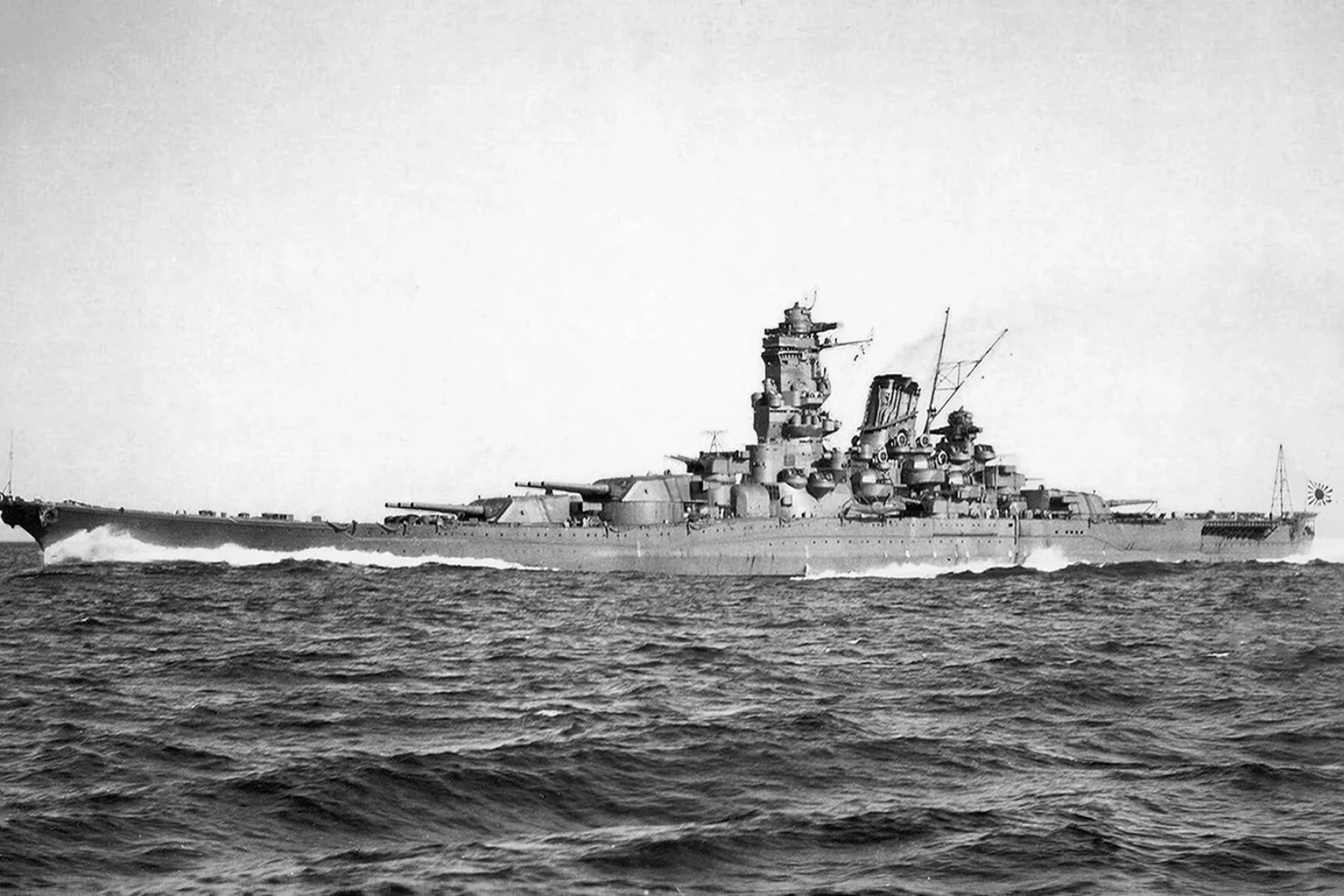
The Yamato was the largest and most heavily armed battleship ever constructed by Japan. Built during World War II, she became a symbol of Japanese naval power and the country's determination to fight a war at sea against the Allied forces.
Construction of the Yamato began in 1937 at the Kure Naval Arsenal in Hiroshima Prefecture. She was commissioned into the Imperial Japanese Navy in December 1941, shortly after the attack on Pearl Harbor.
The battleship was designed around an enormous main armament of nine 46 cm (18.1-inch) guns, the largest naval artillery ever mounted on a warship. Her massive armor protection and displacement of more than 70,000 tons made her exceptionally difficult to destroy.
The Yamato was accompanied by her sister ship Musashi, which was built to the same basic design.
Despite her impressive capabilities, the Yamato spent much of the war without taking part in major surface engagements. Japan's naval strategy increasingly depended on aircraft carriers and air power, limiting the opportunities for battleships such as Yamato to engage Allied surface fleets.
Yamato took part in the Battle of the Philippine Sea in 1944 and later participated in the Battle of Leyte Gulf, one of the largest naval battles in history.
By 1945, Japan's military situation had deteriorated dramatically. Allied forces were advancing toward the Japanese home islands, and the Japanese Navy was increasingly short of fuel, aircraft and trained personnel.
The Yamato's final mission began on 6 April 1945. She was sent toward Okinawa as part of Operation Ten-Go, a desperate attempt to attack Allied forces supporting the invasion of the island.
The mission was essentially a one-way operation. The Yamato had insufficient fuel for a return journey and was expected to beach herself at Okinawa if she reached the island.
Before reaching Okinawa, the Japanese task force was discovered by American aircraft.
On 7 April 1945, hundreds of U.S. carrier aircraft attacked the Yamato and her escorts. After suffering multiple torpedo and bomb hits, the battleship capsized and exploded.
Approximately 3,000 crew members died in the sinking. Only a small number survived.
The wreck of the Yamato lies on the seabed in the East China Sea, approximately 290 kilometres southwest of Kyushu.
The wreck was discovered in 1982 by a Japanese expedition. It rests at a depth of around 350 metres and is broken into several major sections.
Because of its depth and location, the wreck is not accessible to ordinary visitors. It remains an important underwater archaeological site and a powerful reminder of the final stages of the Pacific War.
The history of the battleship is preserved at the Yamato Museum in Kure, Hiroshima Prefecture. The museum contains a large-scale model of the Yamato, original artifacts and extensive information about the ship, the Japanese Navy and the wartime history of Kure.
The museum provides an opportunity to learn about the technological ambitions of the Japanese Navy as well as the human cost of the Pacific War.
The Yamato Museum is located in the port city of Kure, which was one of Japan's most important naval and shipbuilding centers during World War II.
For visitors interested in military history, the museum can be combined with other historical sites in Kure and the wider Hiroshima region.
Historical site: Yamato Museum, Kure, Hiroshima, Japan
Subject: Imperial Japanese Navy / Pacific War
Type: Museum and historical site
Yamato launched: 8 August 1940
Commissioned: 16 December 1941
Sunk: 7 April 1945
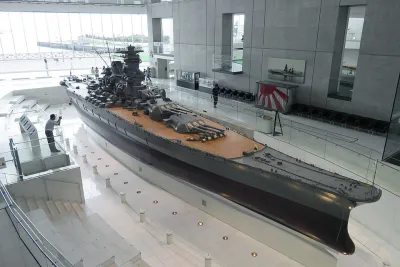
Journey through Japan's pivotal naval history at the Yamato Museum in Kure. Discover the legacy of the Battleship Yamato and its role in WWII Pacific theatre.
Plan your World War II trip with guides to museums, battlefields, memorials and historic sites worldwide. Discover the best WWII locations for your next tour.