
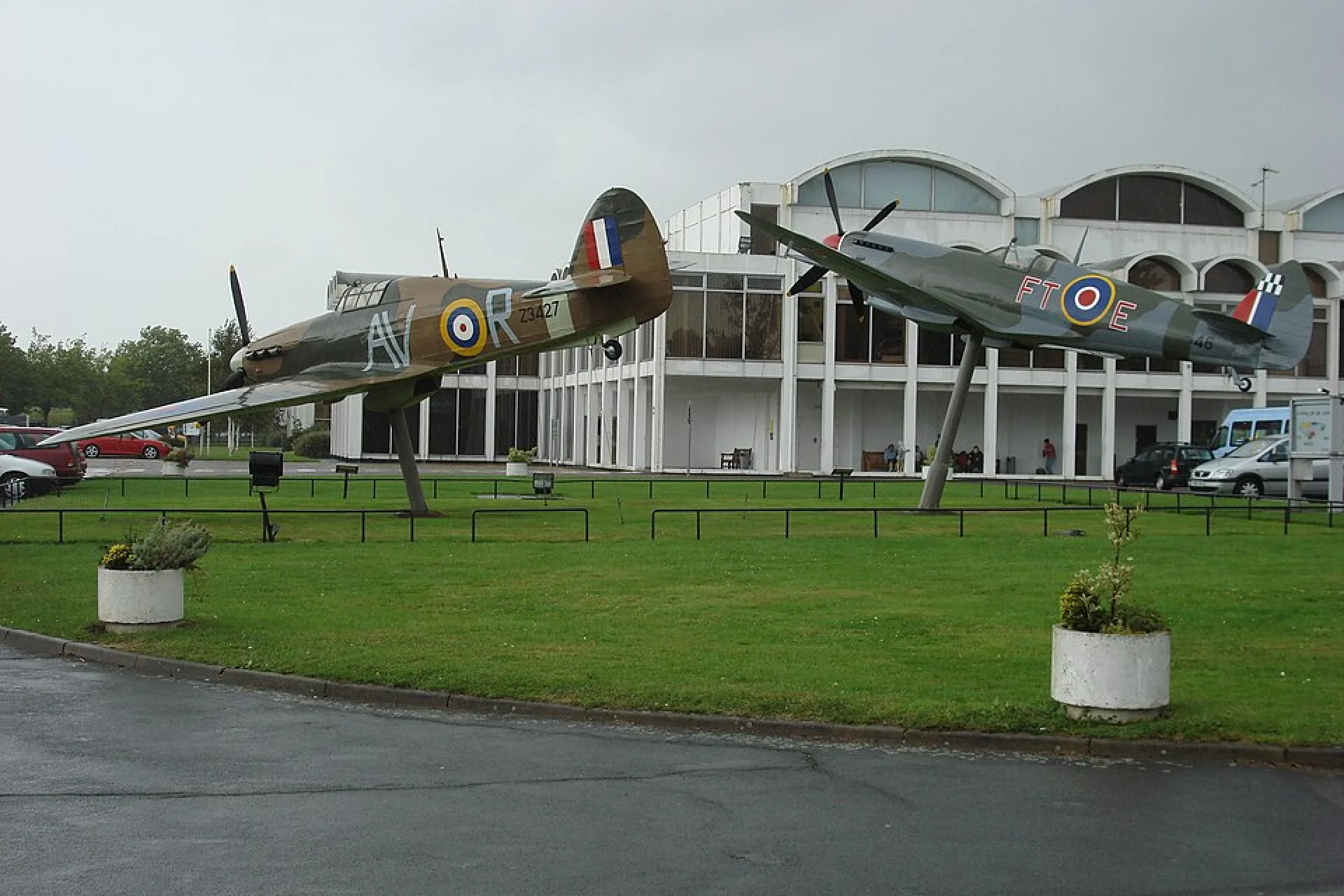
 Photo: Panhard / Wikimedia Commons / License: CC BY-SA 3.0
The Royal Air Force Museum London stands as a poignant tribute to air power history, particularly its pivotal role in World War II. It offers a unique opportunity to explore the aircraft, technology, and human stories that shaped the conflict in the skies, from the Battle of Britain to the strategic bombing campaigns.
Key Facts:
The Royal Air Force (RAF) was central to Britain's defense and offensive capabilities throughout World War II. The museum's location in Hendon holds historical significance, as it was formerly Hendon Aerodrome, a vital base for the Royal Flying Corps during WWI and later a significant RAF station. While the museum itself was established post-war, its comprehensive collection meticulously details the RAF's operational history during WWII. Visitors can trace the dramatic narrative of the Battle of Britain, where RAF Fighter Command valiantly defended the skies against the Luftwaffe, preventing a German invasion. The museum also showcases the evolution of bomber command, from early strategic raids to the immense efforts of later campaigns, and the critical role of coastal command and air-sea rescue operations. Beyond the machines, the exhibits honor the courage and sacrifice of the pilots, ground crew, and countless individuals, including women, who contributed to the war effort in the air. The museum respectfully acknowledges the impact of aerial warfare on both combatants and civilians, providing context to the immense human cost.
Today, the RAF Museum London offers an immersive journey through aviation history, with several hangars dedicated to different eras and themes. The "Battle of Britain Hall" is a highlight, featuring iconic aircraft such as the Supermarine Spitfire and Hawker Hurricane, alongside evocative displays that recreate the tension and heroism of 1940. The "Bomber Hall" presents formidable aircraft like the Avro Lancaster, a symbol of strategic air power, and explores the complex moral and operational aspects of bombing campaigns. Beyond the major combat aircraft, visitors will find reconnaissance planes, training aircraft, and even salvaged wrecks telling their own stories. Interactive exhibits, personal testimonies, and a vast collection of artifacts, uniforms, and documents bring the past to life. The atmosphere encourages reflection on the bravery, technological innovation, and devastating consequences of aerial warfare.
The RAF Museum London is easily accessible by public transport, located in North London. It's generally free to enter, though donations are encouraged, and some special exhibitions or simulator experiences may have a charge. Allow at least half a day, or a full day for a thorough exploration, especially if you wish to engage with all the interactive elements. Wear comfortable shoes as there's a lot of walking across multiple hangars. Photography is generally permitted. Families will find it engaging, with activities tailored for younger visitors. Don't miss the chance to reflect at the various memorials and poignant displays dedicated to those who served and those whose lives were affected by the conflict. Check the museum's official website before your visit for opening times, any temporary closures, or special events, and consider pre-booking if required for specific activities.
Plan your World War II trip with guides to museums, battlefields, memorials and historic sites worldwide. Discover the best WWII locations for your next tour.