
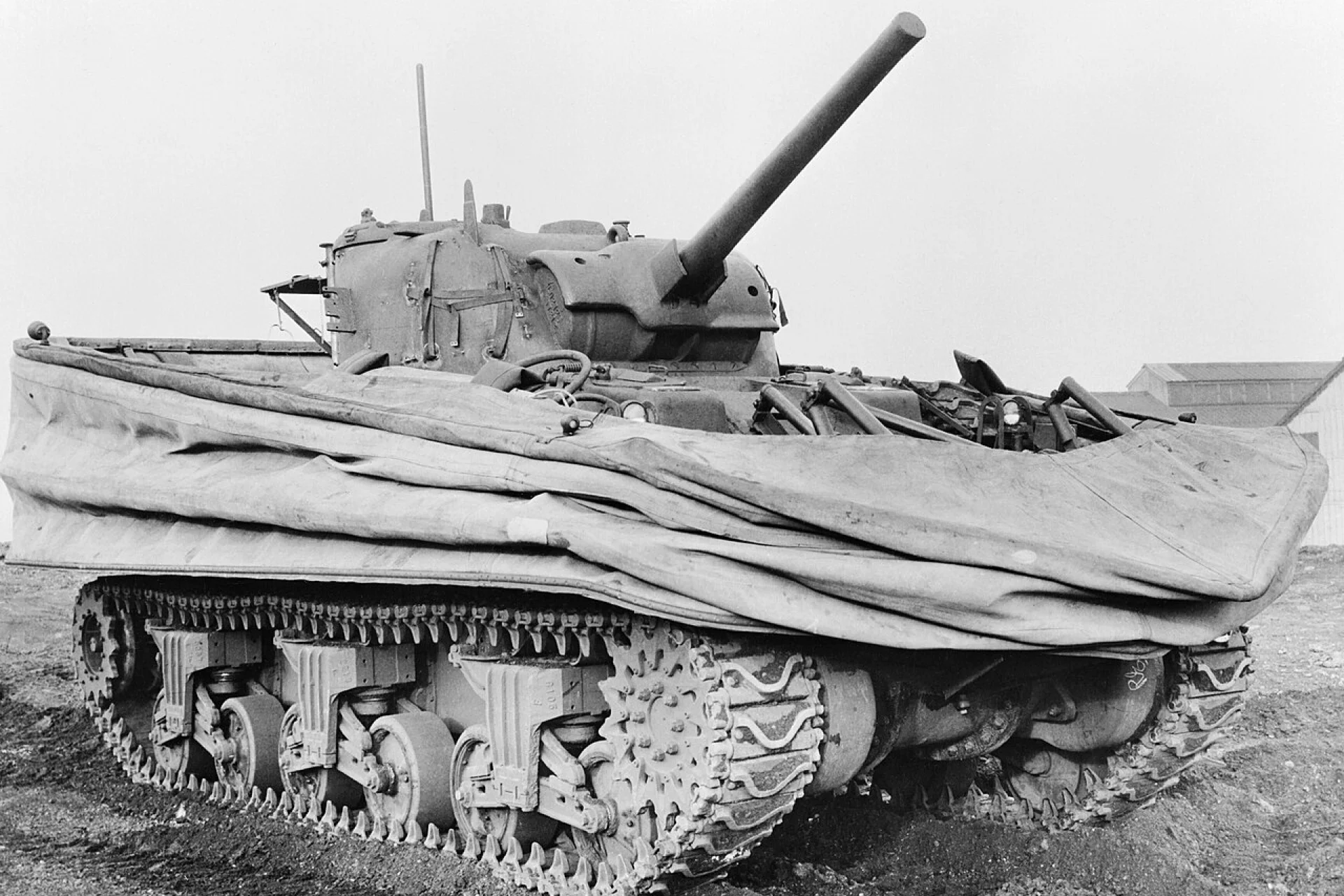
The Duplex Drive (DD) M4 Sherman tank stands as a testament to ingenuity and urgent wartime innovation. Conceived primarily by British engineers, notably Nicholas Straussler and Major-General Percy Hobart, the DD tank was a standard M4 Sherman modified with a waterproof canvas 'flotation screen' and propellers, allowing it to "swim" ashore. These "Hobart's Funnies" were revolutionary, designed to bridge the perilous gap between landing craft and enemy-held beaches, providing crucial armored support to the first waves of infantry. It was a bold gamble, aiming to overcome the immense logistical challenges of an amphibious invasion by bringing heavy firepower directly to the immediate landing zones.
The role of the DD Tank M4 Sherman during Operation Neptune – the naval assault phase of the D-Day landings on June 6, 1944 – was nothing short of pivotal. Its purpose was clear: provide immediate, overwhelming fire support to the infantry as they stormed the heavily fortified beaches of Normandy. Imagine the sight: tanks emerging from the choppy waters, a defiant symbol of the Allied advance. While their performance varied across the five landing sectors due to sea conditions and deployment methods, the successful deployment of DD tanks on beaches like Gold, Juno, and Utah provided invaluable early armor, saving countless infantry lives and contributing significantly to the establishment of the beachheads. On Omaha Beach, however, rough seas led to tragic losses, reminding us of the unforgiving nature of the invasion.
Operation Neptune was the largest amphibious invasion in history, and the DD tanks were at its cutting edge. The crews of these modified Shermans faced immense dangers, navigating treacherous currents and enemy fire in a vehicle never truly designed for the sea. Their courage in deploying miles offshore, often in darkness and under bombardment, speaks volumes of their commitment. The success stories, where DD tanks engaged German strongpoints shortly after landing, illustrate the crucial advantage they offered. Their presence instilled fear in the defenders and hope in the attacking infantry, dramatically altering the initial dynamic of the battle for Normandy. To stand where these tanks once emerged from the sea is to connect with the very moment the tide of war began to turn.
Today, the spirit of the DD Tank M4 Sherman and its role in Operation Neptune can be profoundly experienced along the Normandy coast. While most operational tanks either returned to land or were lost to the deep, several wrecks lie submerged off the beaches, serving as poignant underwater memorials. Intact examples can be found in renowned museums such as The D-Day Story in Portsmouth, UK, or the Musée des Blindés in Saumur, France, where visitors can see the ingenious flotation screen and propellers up close. Walking the beaches of Normandy – from Utah to Sword – allows one to envision these formidable machines emerging from the waves, a silent testament to the strategic brilliance and human sacrifice of D-Day.
Plan your World War II trip with guides to museums, battlefields, memorials and historic sites worldwide. Discover the best WWII locations for your next tour.