
 Photo: LepoRello / Wikimedia Commons / License: CC BY-SA 3.0
Hidden beneath a church in the quiet German town of Haigerloch, the Atomkeller was Nazi Germany's clandestine nuclear research facility. This site represented their final, desperate push to develop atomic technology during World War II, a chilling testament to the scientific and ethical crossroads of the conflict.
Key Facts:
As Allied bombing intensified across Germany in late 1944, the remnants of the German atomic research program, led by Nobel laureate Werner Heisenberg, sought refuge in the remote town of Haigerloch. Deep within a rock-cut cellar beneath the local castle church, scientists embarked on their most ambitious experiment: the B-VIII reactor.
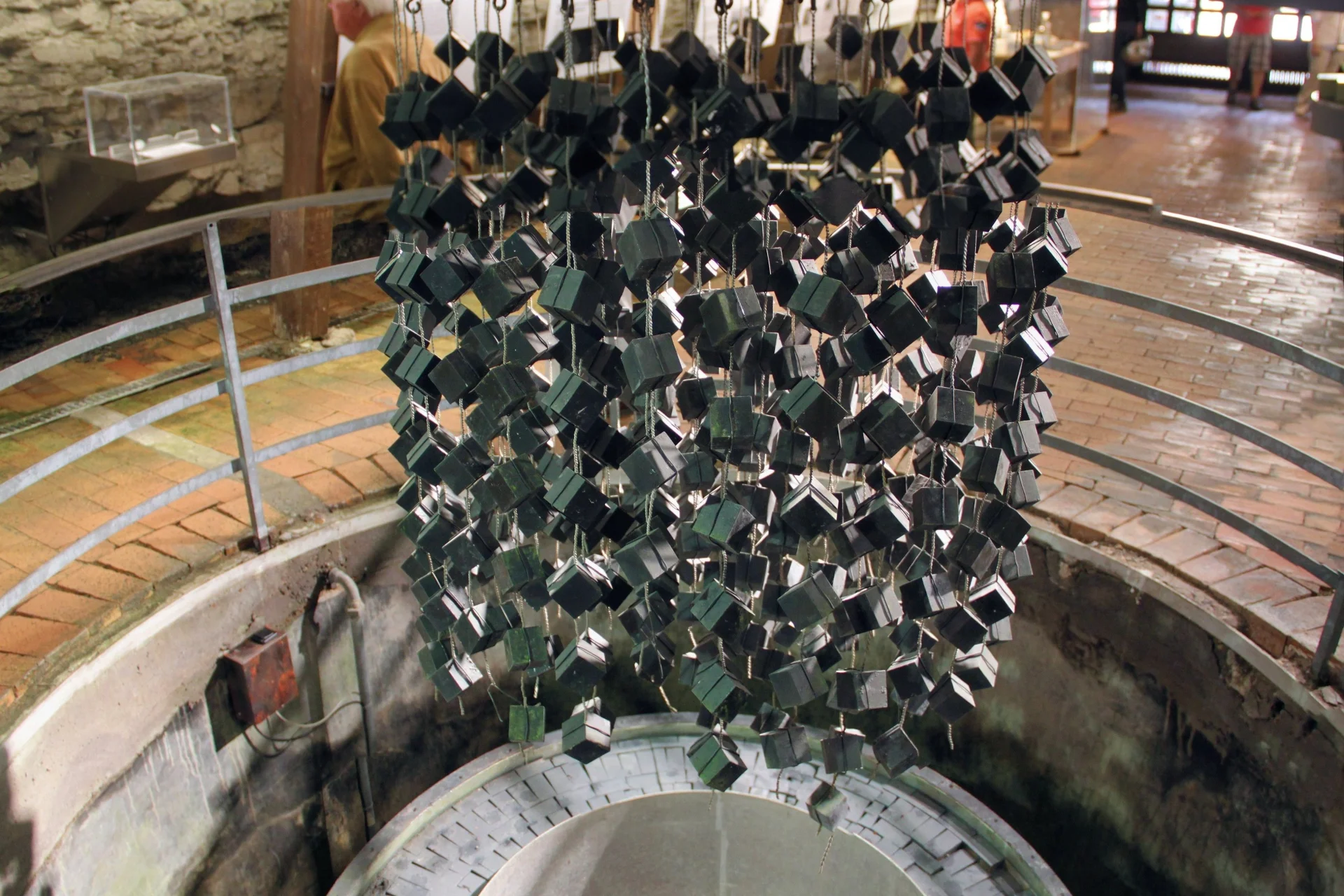
Their audacious goal: to achieve a self-sustaining nuclear chain reaction using uranium cubes (Uranwürfel) suspended in heavy water. For months, under immense secrecy, Heisenberg's team meticulously assembled their reactor. By early 1945, they were tantalizingly close to success; calculations suggested criticality might be reached with slightly more heavy water or uranium. Had they succeeded, the implications for the war would have been catastrophic.
However, time ran out. In April 1945, as Allied forces advanced into Germany, the American Alsos Mission—a special unit tasked with uncovering German scientific secrets—located the Atomkeller. The reactor core, uranium, heavy water, and scientific documentation were swiftly dismantled by the Allies and shipped to the United States. The Atomkeller thus marks the culmination and ultimate failure of Germany's WWII atomic ambitions, a story of scientific brilliance entangled with a morally bankrupt regime.
Today, the Atomkeller Haigerloch functions as a profound and thought-provoking museum, preserving the original rock-cut cellar where history almost took a darker turn. Visitors can descend into its cool, atmospheric depths, which now house a captivating exhibition. The centerpiece is a faithful replica of the B-VIII reactor core, complete with iconic uranium cubes, offering a tangible sense of the audacious experiment conducted here.
The museum meticulously details the history of the German nuclear program, highlighting the ethical dilemmas faced by scientists like Heisenberg and Carl Friedrich von Weizsäcker. Panels explain the scientific principles, geopolitical context, and the dramatic story of the Alsos Mission’s discovery. Standing in this very space evokes a powerful sense of gravitas, prompting reflection on the power of science and its responsibility.
The Atomkeller Haigerloch is located at Pfluggasse 5, 72401 Haigerloch, integrated into the communal "Schlossmuseum." It is easily accessible within the picturesque town of Haigerloch in Baden-Württemberg. Visitors should check the official website for current opening hours and any seasonal variations.
Allow at least an hour to explore the exhibition and absorb the site's unique atmosphere. Explanations are in German and English. While in Haigerloch, explore the charming town, nestled dramatically in a loop of the Eyach river, and visit the castle church above. The Atomkeller offers a rare opportunity to connect with a hidden chapter of World War II, exploring the intersection of advanced science, wartime desperation, and profound ethical questions.
Plan your World War II trip with guides to museums, battlefields, memorials and historic sites worldwide. Discover the best WWII locations for your next tour.