
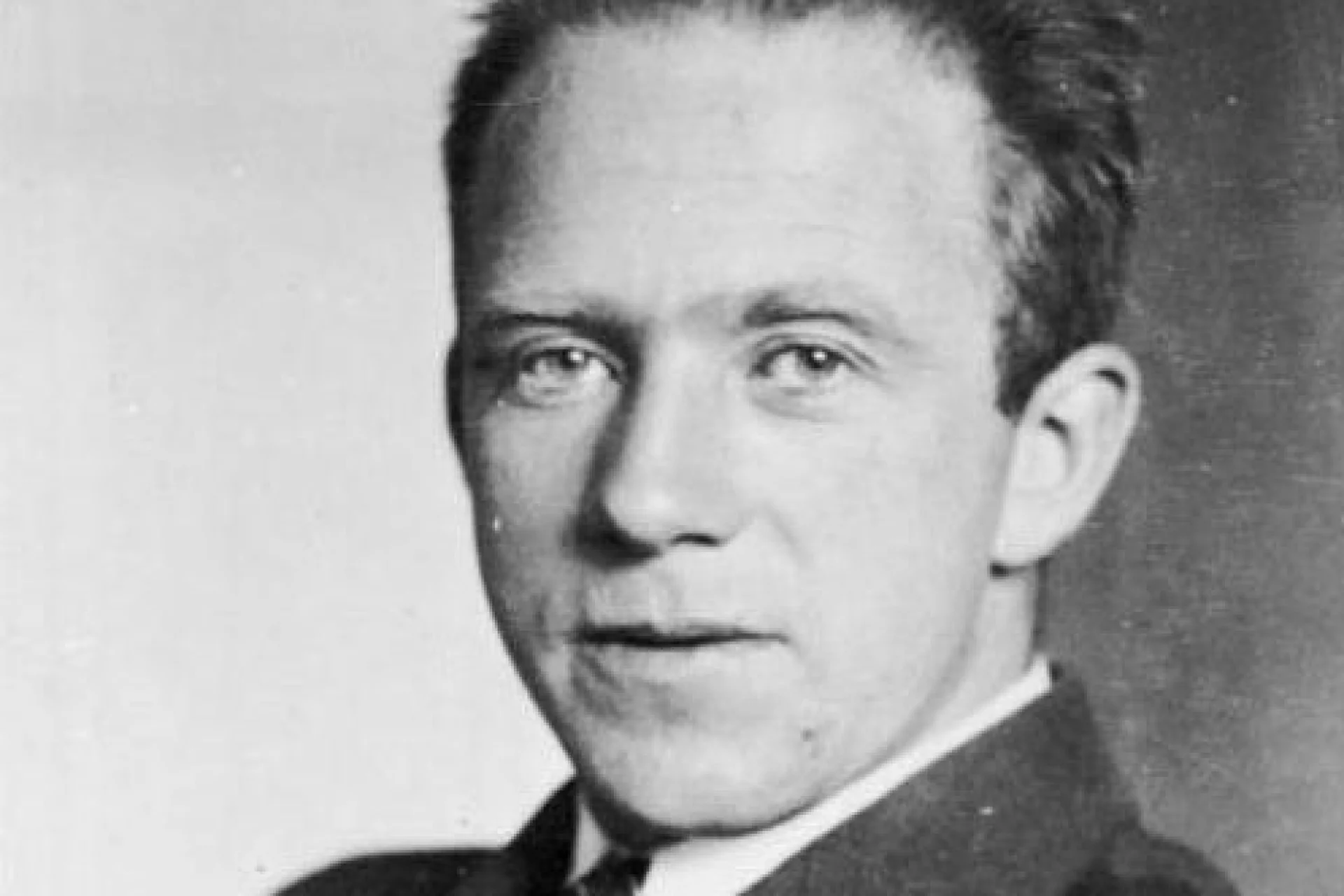
 Photo: Bundesarchiv, Bild 183-R57262 / Wikimedia Commons / License: CC BY-SA 3.0
Werner Heisenberg, a brilliant German physicist and Nobel laureate, stands as one of the most controversial figures in World War II science. As the theoretical head of the German nuclear fission project (Uranverein), his wartime activities and the ultimate failure of Nazi Germany to develop an atomic bomb continue to spark intense historical debate. His story embodies the profound ethical dilemmas faced by scientists caught within totalitarian regimes.
Key Facts:
At the outbreak of World War II, Werner Heisenberg found himself at the nexus of scientific advancement and state ambition. Despite initial suspicion from the Nazi regime for his association with "Jewish physics" (quantum mechanics), his expertise was quickly recognized. From 1942, he assumed a leading role in the German nuclear fission project, the Uranverein, aiming to explore military applications of nuclear energy, including the atomic bomb.
Heisenberg's exact intentions remain a fierce debate. Was he deliberately sabotaging the German bomb effort due to moral objections, or was the program simply hampered by a lack of resources and critical errors compared to the Allied Manhattan Project? The secretly recorded Farm Hall transcripts from 1945, where detained German scientists reacted to news of Hiroshima, provide conflicting insights. While Heisenberg expressed profound relief that Germany had not succeeded, his technical explanations of how the Allies built the bomb indicated a clear grasp of the physics he had seemingly downplayed.
His work under the Third Reich placed him in an unenviable position, navigating scientific integrity within a tyrannical system. His decisions, whether driven by patriotism, scientific curiosity, or a subtle form of resistance, ultimately contributed to Germany's failure to weaponize nuclear technology, a failure with immense implications for the war and the post-war world.
Werner Heisenberg's legacy is irrevocably tied to his wartime activities. Post-war, he continued his distinguished career in physics, playing a pivotal role in rebuilding German science and contributing significantly to the understanding of elementary particles. He served as Director of the Max Planck Institute for Physics and was instrumental in founding CERN.
However, the ethical shadow of the Uranverein persisted. Debates surrounding his wartime motivations have fueled numerous books, plays, and documentaries, notably Michael Frayn's "Copenhagen," exploring his mysterious 1941 meeting with Niels Bohr. This enduring fascination underscores the critical questions his life poses about scientific responsibility, moral compromise, and individual choices when confronted with immense power and horrific ideologies. While direct memorials to his wartime role are scarce, his contributions to physics are celebrated worldwide, and discussions of his life continue in scientific and historical forums, ensuring his complex story remains a vital part of World War II history.
Plan your World War II trip with guides to museums, battlefields, memorials and historic sites worldwide. Discover the best WWII locations for your next tour.