The Battle of Remagen, centered around the audacious capture of the Ludendorff Bridge, marked a pivotal moment in the final push of the Allies into Nazi Germany. This unexpected success secured the first Allied bridgehead across the formidable Rhine River, dramatically accelerating the end of World War II in Europe.
As the Allied forces advanced eastward in early 1945, the Rhine River stood as Germany's last natural defensive barrier. The Germans, understanding its strategic importance, planned to destroy all bridges over the river to slow the Allied advance. However, fate intervened at Remagen.
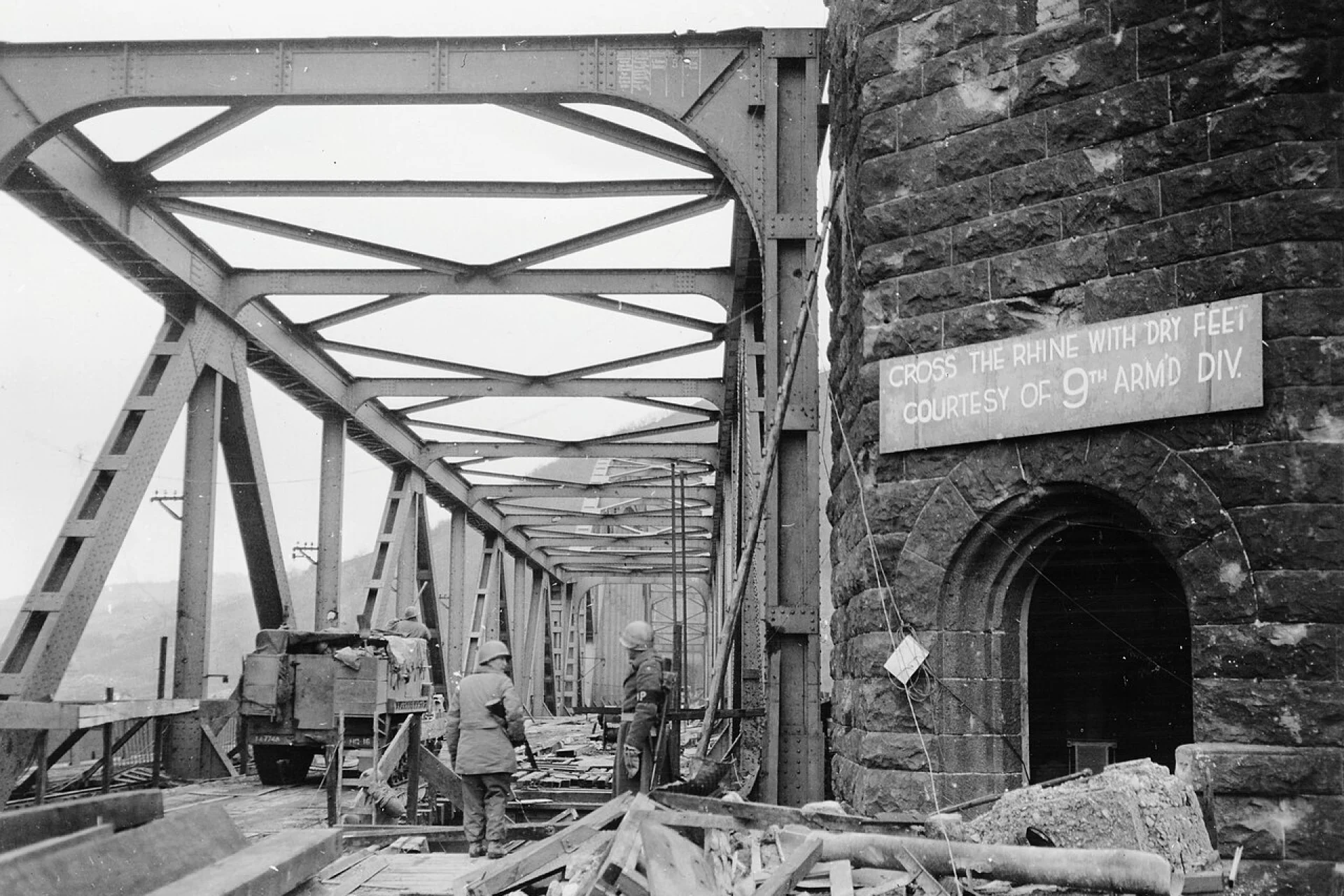
On March 7, 1945, elements of the U.S. 9th Armored Division, part of the U.S. First Army, unexpectedly discovered the Ludendorff Bridge still intact. German demolition charges had failed to fully destroy the railway bridge, allowing American troops to seize it in a daring, rapid assault. This unexpected capture, famously called "The Bridge at Remagen," provided a vital lifeline for Allied forces, allowing thousands of troops, vehicles, and essential supplies to pour into Germany.
Despite repeated and desperate German attempts to destroy the bridge through artillery barrages, V2 rockets, air attacks, and even frogmen, the American engineers worked tirelessly to keep it operational. The bridge, battered but holding, became a symbol of Allied determination and German resilience in defense. Ten days after its capture, weakened by constant attacks and the strain of heavy traffic, the bridge finally collapsed on March 17, 1945, tragically killing 28 American engineers. By then, however, several pontoon bridges had been established, and a significant Allied bridgehead was firmly secured, irrevocably altering the course of the war and hastening victory.
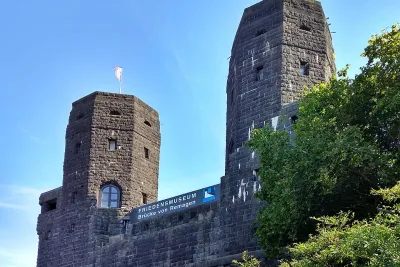
Today, the remnants of the Ludendorff Bridge stand as a powerful memorial and a poignant reminder of the fierce struggle that unfolded here. Visitors can explore the surviving twin towers on the western bank of the Rhine, which once supported the bridge's structure. These towers now house the Peace Museum Remagen - Bridge of Peace (Friedensmuseum Brücke von Remagen), offering a compelling collection of artifacts, photographs, and documents that narrate the bridge's story, the battle, and its enduring message of peace. On the eastern bank, the opposite towers also remain, providing a tangible sense of the bridge's immense scale. Standing by the Rhine, one can visualize the chaos, courage, and human endeavor that defined those ten critical days in March 1945, reflecting on the profound impact of this single structure on the war's conclusion and the lives it touched.
Remagen is easily accessible and offers a moving experience for history enthusiasts. The Peace Museum is well-maintained and provides excellent context. Allow at least 1-2 hours for a thorough visit. Afterwards, take a walk along the Rhine promenade to appreciate the strategic significance of the river. Public transportation connects Remagen to larger cities in Germany, making it a convenient day trip. Consider visiting nearby WWII sites along the Rhine, such as the numerous memorials and former concentration camps, to gain a broader understanding of the region's wartime history. Wear comfortable shoes, as there's plenty to explore both inside the museum and along the riverbanks.
Plan your World War II trip with guides to museums, battlefields, memorials and historic sites worldwide. Discover the best WWII locations for your next tour.