
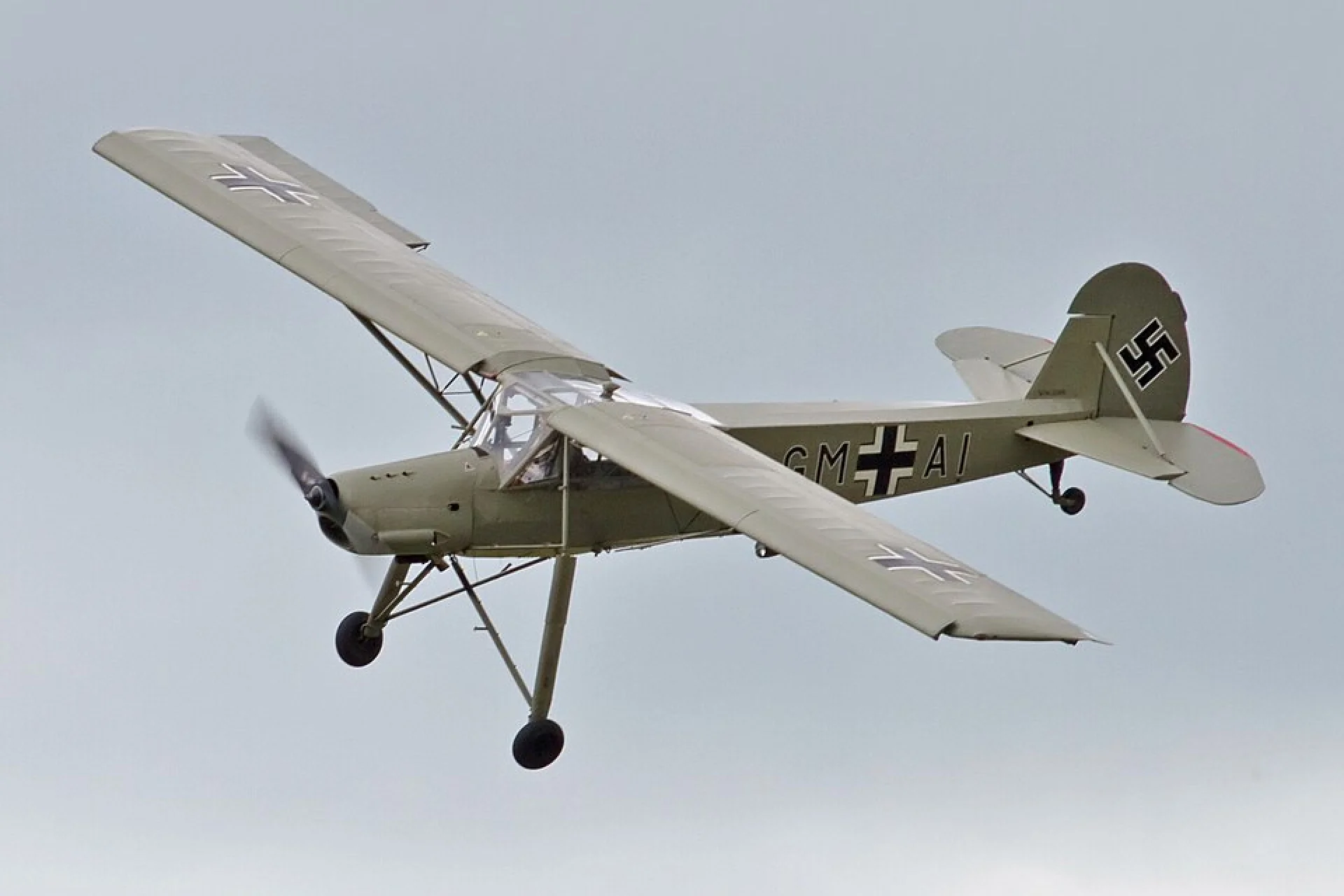
 Photo: Tony Hisgett / Wikimedia Commons / License: CC BY 2.0
The Fieseler Fi 156 Storch was one of the most remarkable aircraft of World War II. Famous for its exceptional short take-off and landing capabilities, this German reconnaissance and liaison aircraft could operate from locations that were completely unsuitable for conventional aircraft.
Its most famous mission took place on September 12, 1943, when a Storch played a crucial role in the dramatic rescue of Italian dictator Benito Mussolini from his mountain imprisonment at Campo Imperatore in the Italian Apennines.
Developed by Gerhard Fieseler's company in Kassel, Germany, the Fi 156 made its first flight in 1936 and entered Luftwaffe service before the outbreak of World War II.
The aircraft received the nickname "Storch" (German for stork) because of its distinctive long landing gear and unusual appearance.
Unlike most military aircraft of its time, the Storch was designed primarily for observation, communication, reconnaissance and liaison duties rather than combat.
Its greatest advantage was its extraordinary ability to operate from extremely short and improvised landing areas.
| Specification | Details |
|---|---|
| Manufacturer | Gerhard Fieseler Werke, Kassel |
| First flight | 1936 |
| Crew | 2–3 |
| Engine | Argus As 10 V8 |
| Engine power | Approximately 240 hp |
| Wingspan | 14.25 m |
| Length | 9.90 m |
| Maximum speed | Approximately 175 km/h |
| Cruising speed | Approximately 130 km/h |
| Range | Approximately 380 km |
| Primary role | Reconnaissance and liaison |
Thanks to its fixed leading-edge slats, large flaps and lightweight construction, the Storch could take off and land at remarkably low speeds.
Under favourable conditions, it required less than 70 metres for take-off and approximately 20 metres for landing, although actual performance depended on wind, terrain, load and pilot skill.
These characteristics made it particularly valuable on the Eastern Front, in North Africa and in mountainous regions where conventional airfields were unavailable.
On July 25, 1943, Benito Mussolini was removed from power following the collapse of his political position in Italy. King Victor Emmanuel III ordered his arrest, and the former dictator was subsequently moved between several secret detention locations.
Eventually, Mussolini was imprisoned at the Hotel Campo Imperatore, a remote mountain hotel situated at approximately 2,130 metres above sea level on the Gran Sasso massif in central Italy.
Following Italy's armistice with the Allies in September 1943, Adolf Hitler ordered a special operation to locate and free his former ally.
The rescue mission, codenamed Operation Eiche (Operation Oak), was organised under the command of German paratrooper officer Major Harald Mors. SS officer Otto Skorzeny also participated and subsequently became the best-known figure associated with the operation.
On September 12, German airborne troops approached Campo Imperatore aboard DFS 230 transport gliders.
The gliders landed on the rocky mountain plateau close to the hotel, surprising the Italian guards stationed there.
Despite the difficult terrain and considerable risks involved, the German soldiers successfully secured the hotel and freed Mussolini without a major firefight.
However, rescuing the former dictator from the mountain presented another challenge.
The remote hotel was connected to the valley by a cable car, but the Germans had planned an aerial evacuation.
This was where the Fieseler Storch became essential.
A Fieseler Fi 156 Storch, piloted by Hauptmann Heinrich Gerlach, landed on the uneven mountain terrain near the hotel.
The aircraft was intended to carry Mussolini away from Campo Imperatore.
Otto Skorzeny insisted on accompanying the former dictator, adding considerable weight to an aircraft already operating under extremely challenging conditions.
With three
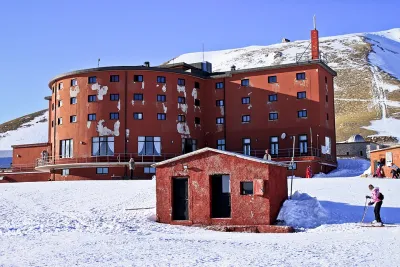
Visit Hotel Campo Imperatore in Italy, the dramatic World War II site where Benito Mussolini was imprisoned and daringly rescued in 1943.
Plan your World War II trip with guides to museums, battlefields, memorials and historic sites worldwide. Discover the best WWII locations for your next tour.