
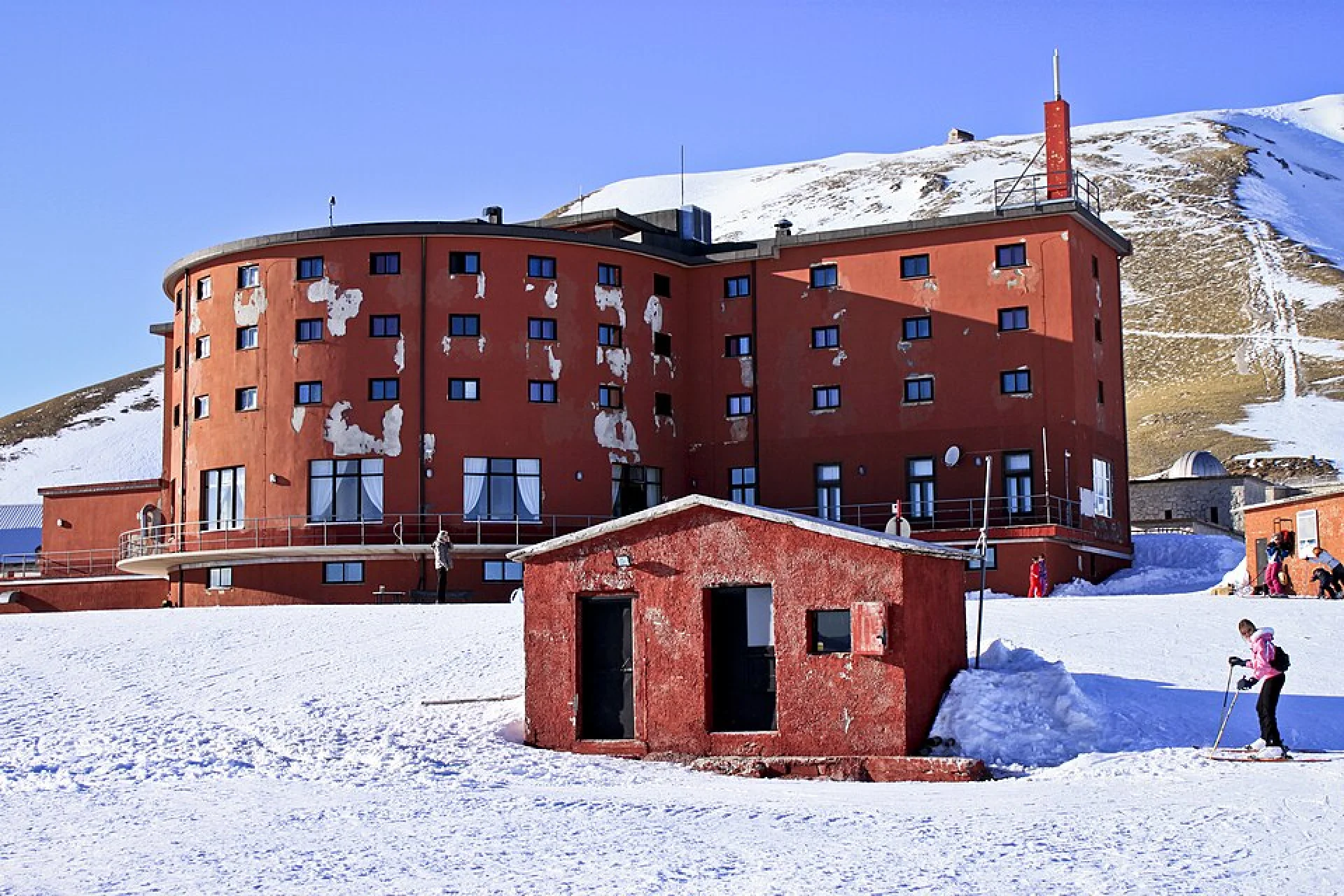
 Photo: Gabriele Altimari / Wikimedia Commons / License: CC BY-SA 3.0
Nestled high in the dramatic peaks of Italy's Gran Sasso d'Italia massif, the Hotel Campo Imperatore stands as a silent witness to one of World War II's most audacious and pivotal events. Originally conceived as a luxurious alpine retreat, its remote location and imposing structure inadvertently cast it into the annals of wartime history, transforming it from a resort into a high-security prison for a deposed dictator.
Opened in 1934, Hotel Campo Imperatore was a testament to modernity and ambition, accessible by Italy's first cable car. Its pristine mountain setting offered breathtaking views and the promise of serene escapes. However, as the global conflict escalated, the tranquil alpine air would soon be charged with political intrigue and military tension, far removed from its intended purpose as a haven for winter sports enthusiasts and summer hikers.
The hotel's moment in the harsh glare of history arrived in September 1943. Following the Allied invasion of Sicily and the subsequent overthrow of Benito Mussolini by the Grand Council of Fascism, the former dictator was imprisoned. After several transfers, he was eventually moved to the seemingly impregnable Hotel Campo Imperatore, chosen for its extreme altitude and the single point of access via the cable car, making escape or rescue appear impossible.
However, Adolf Hitler, intent on restoring Mussolini to power, orchestrated "Operation Oak" (Unternehmen Eiche). On September 12, 1943, under the command of Waffen-SS commando Otto Skorzeny, German paratroopers and Fallschirmjäger units launched a daring glider-borne assault on the mountaintop. In a swift and highly coordinated operation, they landed mere meters from the hotel, overwhelming the Italian carabinieri guards and liberating Mussolini without firing a shot against the Italian forces, though one Italian guard was killed in the initial landing chaos. This incredible feat of special operations redefined what was thought possible in wartime rescue missions and dramatically shifted the political landscape of Italy.
Today, Hotel Campo Imperatore continues to operate as a hotel, allowing visitors to walk the very same corridors where Mussolini was held captive and where Skorzeny's commandos secured his release. While the interior has seen renovations, the structure itself, and critically, the surrounding dramatic landscape, remain largely unchanged. You can ride the cable car, ascending to the same altitude and perspective from which the audacious rescue was launched. The sense of isolation and the strategic brilliance of the operation become palpable as you stand amidst these towering peaks. Though there isn't an extensive dedicated museum, the atmosphere of the place speaks volumes, offering a profound connection to a moment that shaped the course of the war.
A journey to Hotel Campo Imperatore is an essential pilgrimage for anyone tracing the complex tapestry of World War II history. It's a place where the grandeur of nature meets the high drama of human conflict, offering a unique perspective on the desperate measures and incredible bravery displayed during the war. It reminds us of the power of strategic planning and the unpredictable turns of wartime events. Visiting here is not just about seeing a building; it's about standing on hallowed ground where a pivotal chapter in Italy's wartime narrative unfolded, urging contemplation on the human impact of such extraordinary events.
Plan your World War II trip with guides to museums, battlefields, memorials and historic sites worldwide. Discover the best WWII locations for your next tour.