
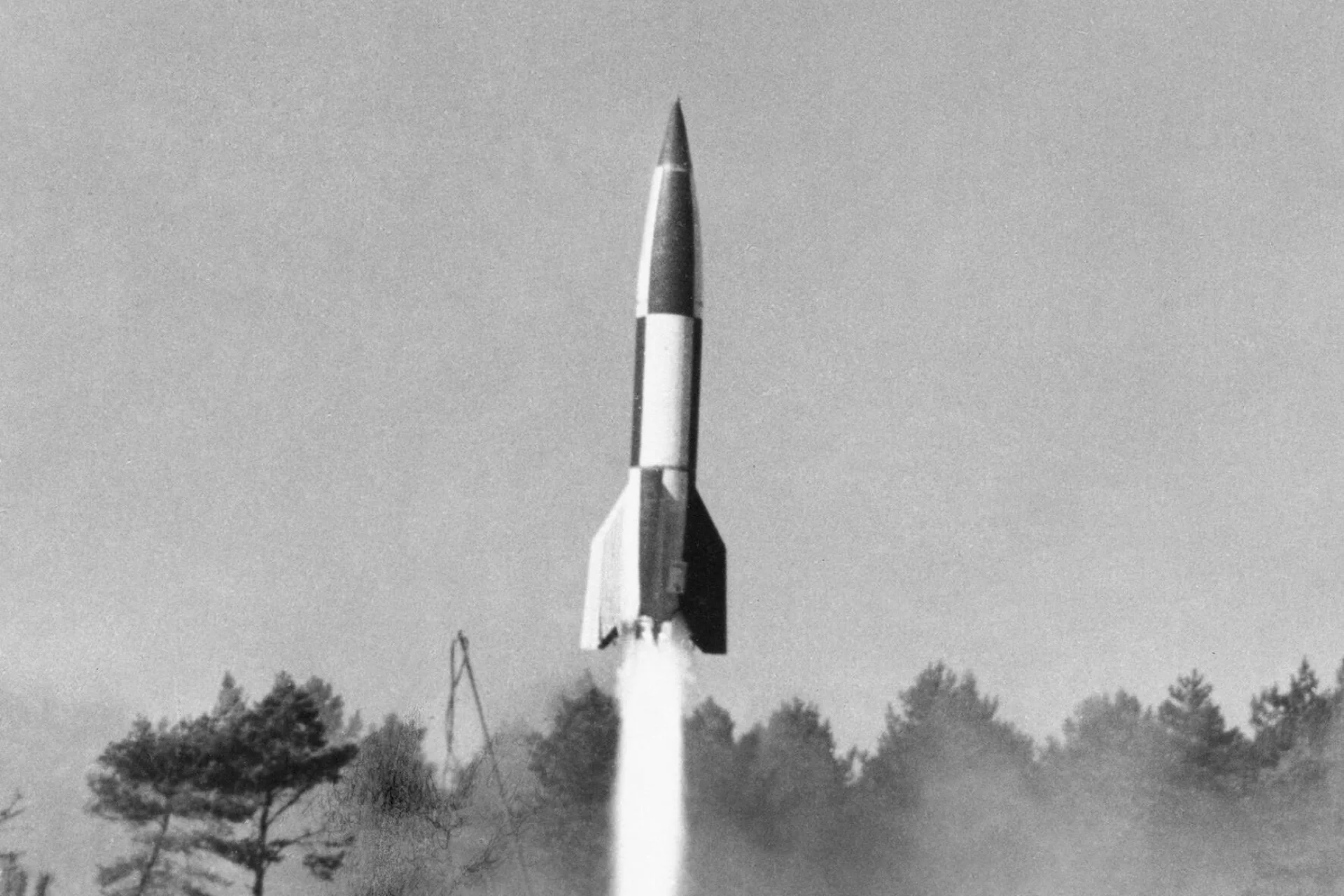
The V-2 rocket was the world's first long-range ballistic missile and one of the most technologically advanced weapons developed during World War II. Developed in Nazi Germany under the direction of Wernher von Braun, it was intended to strike targets far beyond the range of conventional artillery.
The rocket was officially designated Aggregat 4 (A4), while the name V-2 came from the German Vergeltungswaffe 2 — "Vengeance Weapon 2."
Development of the V-2 began in the 1930s at the German Army's rocket research facility at Peenemünde on the Baltic coast. The project brought together engineers and scientists who developed liquid-fuel rocket technology on an unprecedented scale.
The V-2 was powered by a mixture of liquid oxygen and alcohol and could reach an altitude of around 80–90 kilometers on a typical combat trajectory. It traveled at several times the speed of sound, making it impossible for its targets to defend themselves once the missile had been launched.
The weapon carried a warhead of approximately 1,000 kilograms and had a range of roughly 300 kilometers.
The first combat launches took place in September 1944. V-2 rockets were subsequently fired against targets in several European countries, including Belgium, France, the Netherlands and the United Kingdom.
London was one of the main targets. Other heavily attacked locations included Antwerp, which became one of the most important targets because of its port facilities used by the Allies.
Unlike conventional aircraft attacks, there was virtually no warning before a V-2 struck. The rocket traveled at such a high speed that the explosion could occur before the sound of the approaching missile was heard.
Two locations are particularly important when exploring the history of the V-2 today.
Peenemünde was the main development and testing center. The site is now home to the Peenemünde Historical Technical Museum, where visitors can learn about the development of the V-2 and the wider German missile program.
The story of the V-2 is also inseparable from Mittelbau-Dora concentration camp. From 1943 onward, V-2 rockets were produced underground in the Mittelwerk factory near Nordhausen. Prisoners were forced to manufacture the weapons under brutal conditions.
Thousands of concentration camp prisoners died as a result of forced labor, starvation, disease, abuse and executions. More prisoners died producing the V-2 than were killed by the weapon in combat.
After the war, the V-2 program had a major influence on the development of modern rocketry.
American and Soviet forces captured rockets, technical documentation and specialists. Wernher von Braun and many other German rocket engineers were brought to the United States, where their expertise contributed to the American rocket program.
Modified V-2 rockets were subsequently used for scientific experiments and helped establish the technological foundations for later ballistic missiles and space launch vehicles.
The development of the V-2 therefore represents a disturbing contradiction of modern technology: a weapon created for terror and warfare became one of the foundations of the technology that eventually carried humans into space.
Several historically significant locations connected to the V-2 can still be visited today:
Exploring these locations provides a deeper understanding of both the technological development of the V-2 and the human cost behind it.
| German designation | Aggregat 4 (A4) |
| Common name | V-2 |
| Type | Ballistic missile |
| Developed in | Nazi Germany |
| Development site | Peenemünde |
| Propellant | Liquid oxygen and alcohol |
| Range | Approximately 300 km |
| Warhead | Approximately 1,000 kg |
| First combat use | September 1944 |
| Main production site | Mittelwerk, near Nordhausen |
| Major targets | London, Antwerp and other Allied cities |
The V-2 was not simply a revolutionary piece of military technology. Its history connects Peenemünde, Mittelbau-Dora, the Allied bombing campaign, forced labor and the beginnings of the space age.
Visiting the surviving sites allows you to see the places where this technology was developed, produced and deployed — and to understand the human consequences behind one of the most significant weapons of World War II.
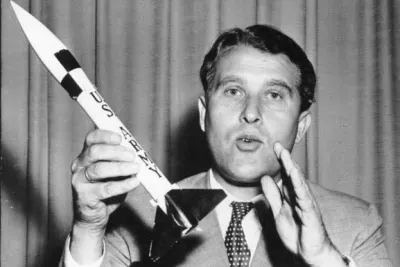
Discover the controversial life of Wernher von Braun, from the V-2 rocket at Peenemünde and Mittelbau-Dora to his role in America's Apollo space program.
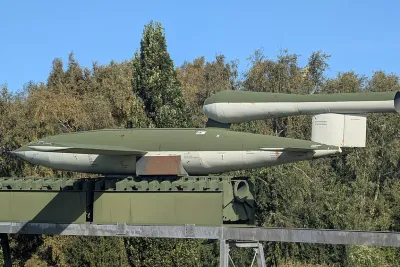
Explore Peenemünde, the birthplace of rocket technology during WW2. Discover its complex history and impact at this crucial German site.
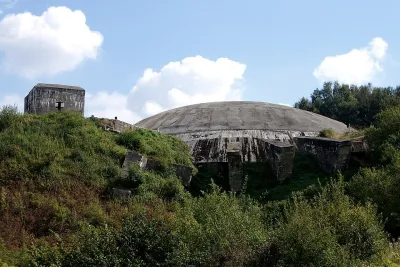
Explore La Coupole in Wizernes, France, a colossal underground WWII V-2 bunker. Understand its history, the human cost, and Allied efforts against Hitler's 'Vengeance Weapons'.
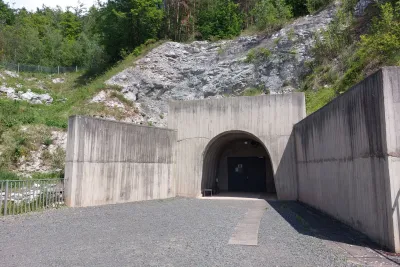
Visit Gedenkstätte Mittelbau-Dora, a WWII concentration camp where prisoners built V-2 rockets. A powerful memorial for remembrance and historical insight.
Plan your World War II trip with guides to museums, battlefields, memorials and historic sites worldwide. Discover the best WWII locations for your next tour.