
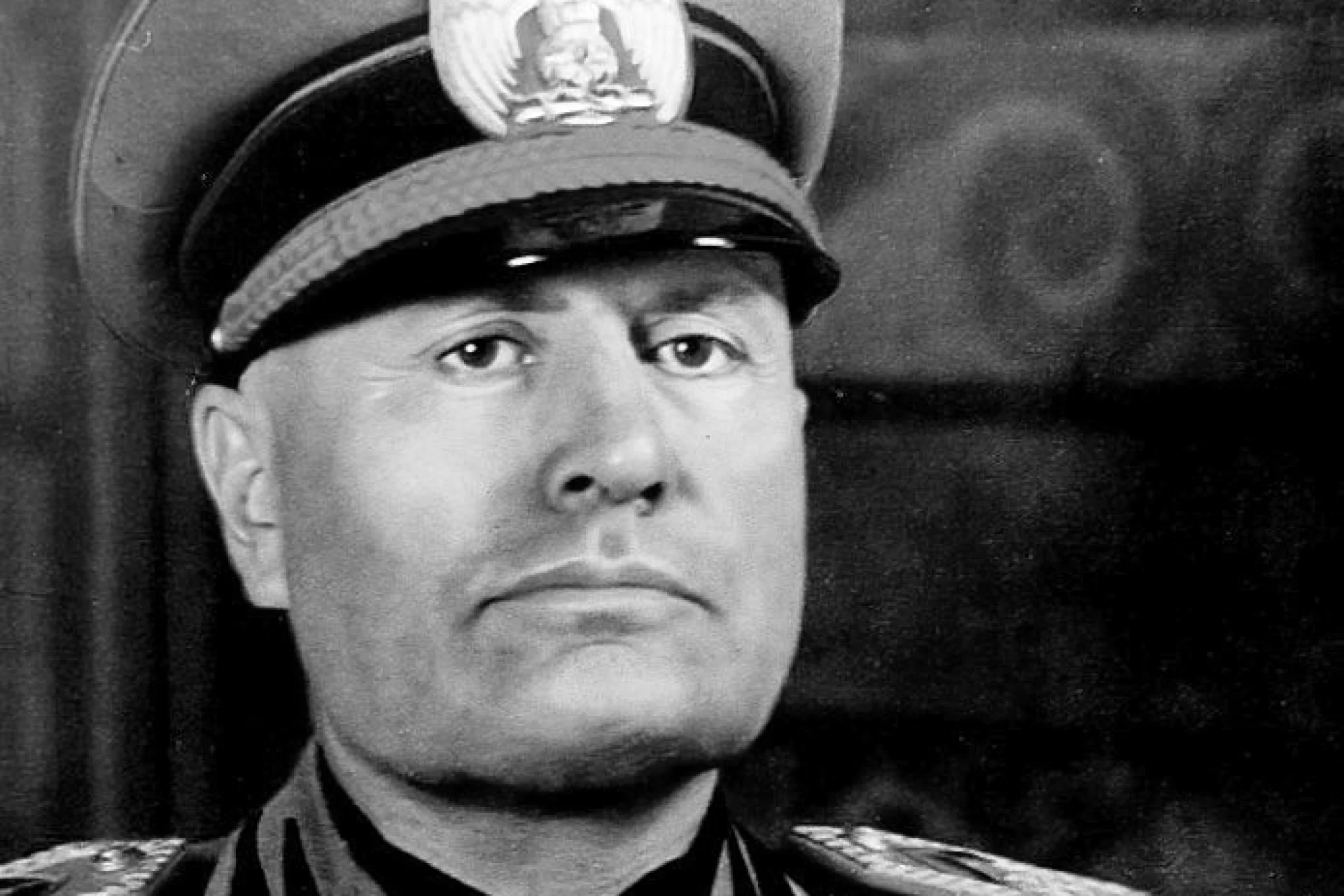
Benito Mussolini was the founder of Italian Fascism and the dictator of Italy from 1925 until his downfall in 1943. Known as Il Duce, meaning “The Leader,” he allied Italy with Adolf Hitler’s Nazi Germany and led the country into World War II. His rule ended in military disaster, civil conflict, and the collapse of the Italian Fascist regime.
Today, numerous historical sites across Italy preserve the history of Mussolini, the Italian Fascist regime, the German occupation, and the final battles of World War II.
Benito Mussolini was born on July 29, 1883, in Dovia di Predappio, in northern Italy. He initially worked as a journalist and was active in the socialist movement. During World War I, however, he abandoned socialism in favor of aggressive nationalism and eventually founded the Italian Fascist movement in 1919.
In October 1922, Mussolini came to power following the March on Rome, a Fascist show of force that pressured King Victor Emmanuel III to appoint him prime minister. Over the following years, Mussolini dismantled Italy’s democratic institutions, suppressed political opposition, and established a dictatorship.
His regime promoted nationalism, militarism, and the ambition to establish a new Italian empire. Italy invaded Ethiopia in 1935 and occupied Albania in 1939. In 1938, Mussolini’s government introduced antisemitic racial laws that discriminated against Jewish Italians.
Mussolini and Hitler developed an increasingly close political and military alliance during the 1930s. In May 1939, Germany and Italy signed the Pact of Steel, formalizing their alliance.
When World War II began in September 1939, Italy initially remained outside the conflict. On June 10, 1940, Mussolini declared war on France and Great Britain, expecting a rapid Axis victory.
However, Italian military campaigns in Greece, North Africa, and elsewhere exposed serious weaknesses in Italy’s armed forces. As the war progressed, Italian defeats and the growing destruction of the country undermined support for Mussolini’s government.
On July 25, 1943, following the Allied invasion of Sicily and a political crisis within the Fascist regime, Mussolini was removed from power and arrested on the orders of King Victor Emmanuel III.
After Italy announced an armistice with the Allies in September 1943, German forces occupied much of the country. German paratroopers and other German forces rescued Mussolini from captivity at the Campo Imperatore hotel on the Gran Sasso mountain in a dramatic operation on September 12, 1943.
With German support, Mussolini established the Italian Social Republic, also known as the Republic of Salò. Based in German-occupied northern Italy, this puppet state continued fighting alongside Nazi Germany against the Allies and the Italian Resistance.
The period was marked by civil war, repression, deportations, and violence against civilians. Italian Fascist authorities collaborated with German forces in the persecution and deportation of Jews.
By April 1945, Allied forces were advancing through northern Italy, while Italian partisan groups were taking control of towns and cities.
Mussolini attempted to flee north toward Switzerland. On April 27, 1945, Italian partisans captured him near Dongo on Lake Como while he was traveling with a German military column. On April 28, Mussolini and his companion Clara Petacci were executed by Italian partisans near Giulino di Mezzegra.
Their bodies were subsequently taken to Milan and displayed publicly at Piazzale Loreto. Mussolini’s death became a powerful symbol of the collapse of Italian Fascism.
Italy contains many places connected to Mussolini’s rise, his wartime rule, and the final months of World War II. These destinations can be combined into historical road trips exploring the Italian campaign and the end of Fascist rule.
Predappio, in the Emilia-Romagna region, is the birthplace of Benito Mussolini. The town contains buildings associated with his early life and the history of Italian Fascism.
Visitors interested in twentieth-century Italian history can explore the town and the surrounding region to learn about Mussolini’s origins and the legacy of his dictatorship.
The Campo Imperatore hotel on the Gran Sasso massif in the Abruzzo region became internationally known as the location where Mussolini was held before his rescue by German forces in September 1943.
The mountain setting and the surviving hotel provide a connection to one of the most famous special operations of World War II. Visitors should check current access conditions and opening arrangements before traveling.
The area around Lake Como in northern Italy played a decisive role during the final days of Mussolini’s life. Near Dongo, Italian partisans captured him as he attempted to escape toward Switzerland in April 1945.
The surrounding towns and historical sites offer opportunities to learn about the Italian Resistance, the collapse of the Fascist regime, and the final stages of the war in Italy.
Giulino di Mezzegra, near Lake Como, is associated with the execution of Mussolini and Clara Petacci on April 28, 1945. The location provides an important historical connection to the final collapse of Italian Fascism.
Visitors exploring the area can combine this stop with Dongo and other sites associated with the Italian Resistance.
Piazzale Loreto in Milan became one of the most significant locations associated with the end of Mussolini’s regime. On April 29, 1945, the bodies of Mussolini, Petacci, and other executed Fascists were publicly displayed there.
Today, the square is an ordinary urban location, but it remains an important place for understanding the dramatic and often violent end of Fascist rule in Italy.
A historical journey through Mussolini-related sites can begin in Predappio, continue to the Gran Sasso massif, and then explore northern Italy around Lake Como and Milan. Because these locations are spread across the country, a multi-day road trip is the most practical option for visiting several of them.
Travelers can combine these sites with World War II museums, resistance memorials, military cemeteries, and locations connected to the Allied campaign in Italy.
Before visiting, check opening hours, access restrictions, and local historical information. Some sites are ordinary public places rather than dedicated museums, and not every location offers guided tours.
Explore the places that shaped Mussolini’s rise, the Italian campaign, and the final days of Fascist Italy through a self-planned World War II history tour.
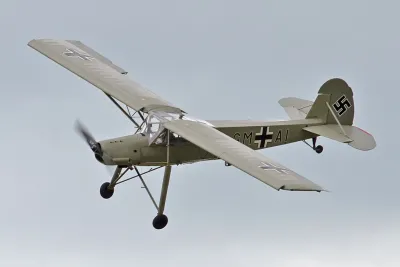
Discover the Fieseler Fi 156 Storch and its daring role in the 1943 rescue of Benito Mussolini at Campo Imperatore on Italy's Gran Sasso mountain.
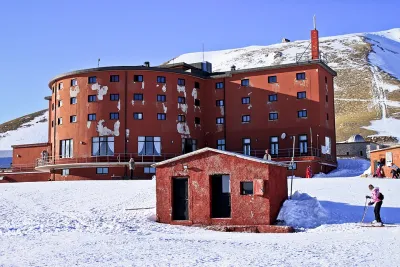
Visit Hotel Campo Imperatore in Italy, the dramatic World War II site where Benito Mussolini was imprisoned and daringly rescued in 1943.
Plan your World War II trip with guides to museums, battlefields, memorials and historic sites worldwide. Discover the best WWII locations for your next tour.