
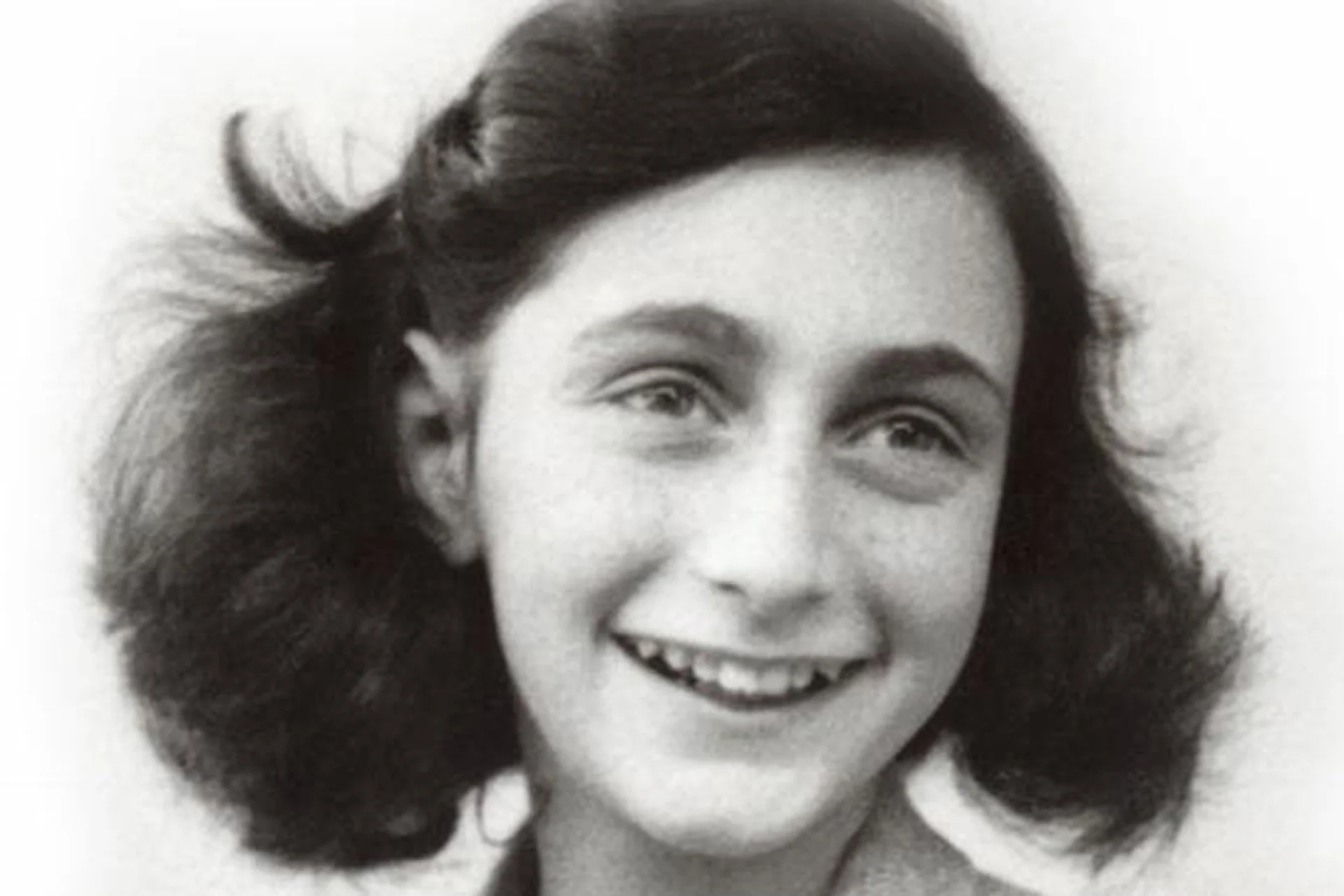
Anne Frank is one of the best-known victims of the Holocaust. Her diary, written while she and her family were hiding from the Nazis in Amsterdam, has become one of the most widely read personal accounts of life during the Holocaust.
Her story is also closely connected to Bergen-Belsen, where Anne Frank and her sister Margot died only weeks before the camp was liberated.
Anne Frank was born in Frankfurt, Germany, in 1929. Her family moved to Amsterdam in 1933 after the Nazis came to power in Germany.
In July 1942, Anne, her parents Otto and Edith, and her sister Margot went into hiding in a concealed section of Otto Frank's former business premises. Anne called it the "Secret Annex" in her diary.
The family remained in hiding for more than two years.
On 4 August 1944, the hiding place was discovered and everyone inside was arrested.
Anne and Margot were first taken to the Westerbork transit camp in the Netherlands. On 3 September 1944, they were deported to Auschwitz-Birkenau in occupied Poland.
In late October 1944, Anne and Margot were selected for transport from Auschwitz to Bergen-Belsen. They arrived at the concentration camp in northern Germany in early November 1944.
Conditions at Bergen-Belsen were extremely harsh. The camp was severely overcrowded, food was scarce, and sanitary conditions deteriorated dramatically. Epidemics spread through the camp, particularly during the winter of 1944–45.
Anne and Margot were held in the women's section of the camp.
Anne became increasingly ill and eventually contracted typhus, a disease that spread rapidly under the terrible conditions in the camp. Margot also became seriously ill.
Both sisters died in Bergen-Belsen in February or March 1945. Their exact dates of death are unknown.
British forces liberated Bergen-Belsen on 15 April 1945.
By then, Anne and Margot had already been dead for several weeks.
The camp was later completely destroyed because of the severe typhus epidemic. Anne and Margot therefore have no identifiable grave at Bergen-Belsen. Today, a memorial stone commemorates the two sisters at the site of the former camp.
Anne's father, Otto Frank, was the only member of the immediate family to survive the Holocaust.
After the war, he returned to Amsterdam and discovered Anne's diary. He arranged for it to be published in 1947.
Anne's diary has since been translated into numerous languages and has introduced millions of readers to the personal experience of a young Jewish girl living under Nazi persecution.
Her story has also made Bergen-Belsen one of the places most closely associated with the final months of her life.
Today, the Bergen-Belsen Memorial preserves the history of the concentration camp and documents the fate of its prisoners. The site includes the former camp grounds, memorials, documentation facilities and exhibitions.
For visitors interested in Anne Frank's story, Bergen-Belsen represents the final chapter of her life and an important place for understanding the persecution and murder of European Jews during the Holocaust.
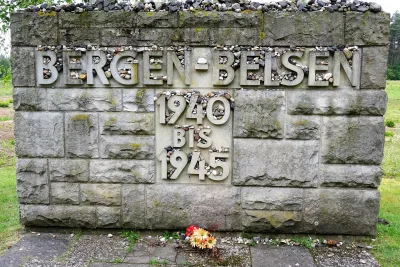
Visit Gedenkstätte Bergen-Belsen, a memorial and former concentration camp. Understand the poignant history of this WWII site of profound human tragedy.
Plan your World War II trip with guides to museums, battlefields, memorials and historic sites worldwide. Discover the best WWII locations for your next tour.