
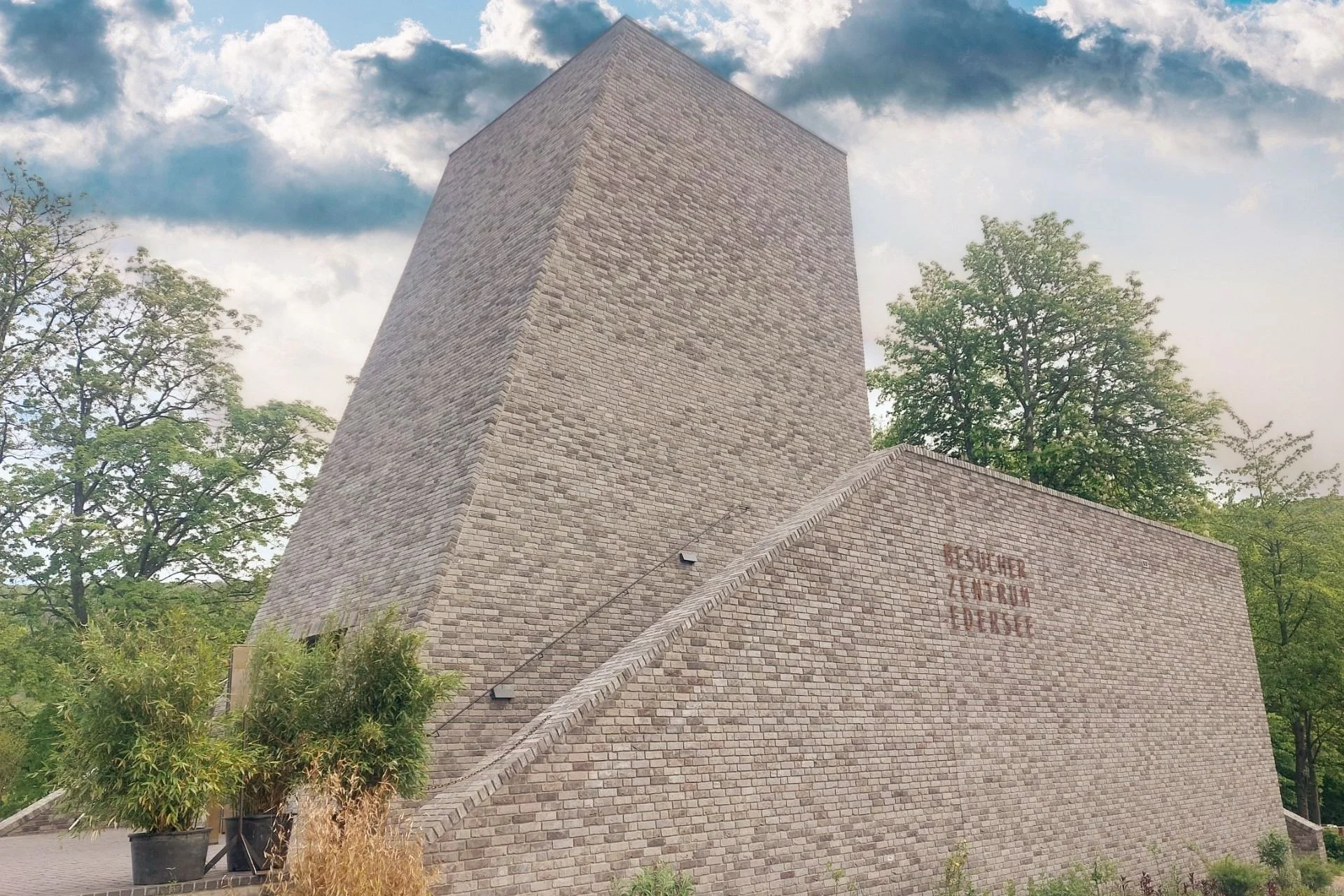
The Edersee Visitor Center stands at the threshold of a landscape that silently recounts one of World War II’s most audacious and destructive operations. Here, amidst the serene natural beauty of the Kellerwald-Edersee Nature Park, lies the Eder Dam, a monumental structure forever linked to the ingenuity of war and its devastating consequences. For those seeking to connect with the strategic complexities and human stories of WWII, a visit to Edersee offers a profound encounter with history.
Completed in 1914, the Eder Dam was an engineering marvel of its time, designed primarily to regulate the water levels of the Weser River and supply water to the Mittelland Canal. Crucially, it also fed hydroelectric power stations and served as a vital water reservoir for the industrial heartland of Germany – the Ruhr Valley. During World War II, this majestic dam became a linchpin of the German war economy, its uninterrupted function essential for industrial production and waterway transportation. Its strategic importance made it an inevitable target.
The night of May 16-17, 1943, etched Edersee into the annals of World War II history. It was then that Operation Chastise, famously known as the "Dam Busters" raid, unfolded. Under the command of Wing Commander Guy Gibson, the RAF's newly formed 617 Squadron, flying specially modified Avro Lancasters, unleashed Barnes Wallis's revolutionary "Upkeep" bouncing bombs. Their mission: to breach the Ruhr Valley dams.
While the Möhne Dam was the primary target, the Eder Dam, with its massive concrete structure, presented an equally formidable challenge. The attack on Edersee was perilous, requiring incredible precision flying at extremely low altitudes. After multiple attempts, the dam was breached, releasing a colossal torrent of water that surged through the valley, causing widespread destruction, inundating towns and villages, and tragically claiming the lives of many, including forced laborers. This operation, while a feat of engineering and aerial bravery, underscored the brutal realities of strategic bombing and the catastrophic impact on civilian populations and infrastructure.
Today, the Edersee Visitor Center serves as a gateway to understanding this critical chapter. While the original dam was swiftly repaired and continues to stand, the landscape still bears the echoes of that fateful night. Visitors can explore detailed exhibitions at the visitor center, offering insights into the dam's construction, its wartime significance, and the extraordinary story of Operation Chastise. Information panels and displays respectfully convey the human stories connected to the raid, from the aircrews to the civilian population affected by the floods.
Walking across the rebuilt dam provides a tangible connection to the scale of the structure and the immense forces unleashed. Panoramic views of the Edersee and the surrounding nature park invite contemplation, contrasting the area's current tranquility with its dramatic past.
A journey to the Edersee Visitor Center is an essential pilgrimage for anyone tracing the path of World War II. It offers a unique perspective on the strategic importance of infrastructure, the daring innovation of wartime engineering, and the profound human cost of conflict. This historic site is not merely a monument to a military action but a solemn reminder of the war's far-reaching consequences and the resilience of those who endured them. Standing here, you truly feel the weight of history and the importance of remembering.
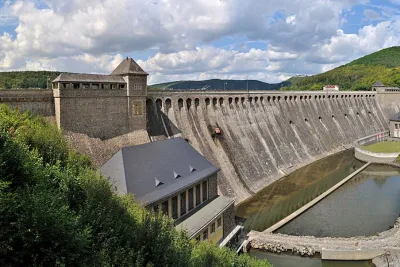
Visit the Eder Dam, a key target of the Dambusters Raid, and immerse yourself in its WWII history. Discover the strategic importance and engineering marvel in Germany.
Rating: ★★★★☆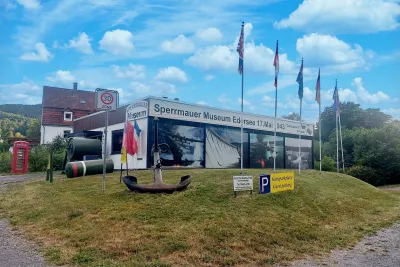
Explore the Sperrmauer Museum and the history of the Edersee Dam, a critical target during Operation Chastise in WWII. Discover its impact and legacy.
Rating: ★★★☆☆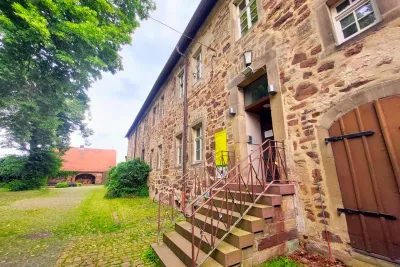
Visit Breitenau Concentration Camp Memorial in Guxhagen-Breitenau, an early Nazi site of terror and forced labor. A crucial part of your WW2 historical journey.
Rating: ★★★★☆
Explore the Weinbergbunker in Kassel, a key air-raid shelter for civilians during WWII. Understand the human experience of survival under relentless bombing.
Rating: ★★★★☆
Explore Gedenkstätte und Museum Trutzhain, a former WWII POW camp (Stalag IX A) and post-war Displaced Persons camp. A powerful site of human resilience.
Rating: ★★★★☆
Plan your World War II trip with guides to museums, battlefields, memorials and historic sites worldwide. Discover the best WWII locations for your next tour.